
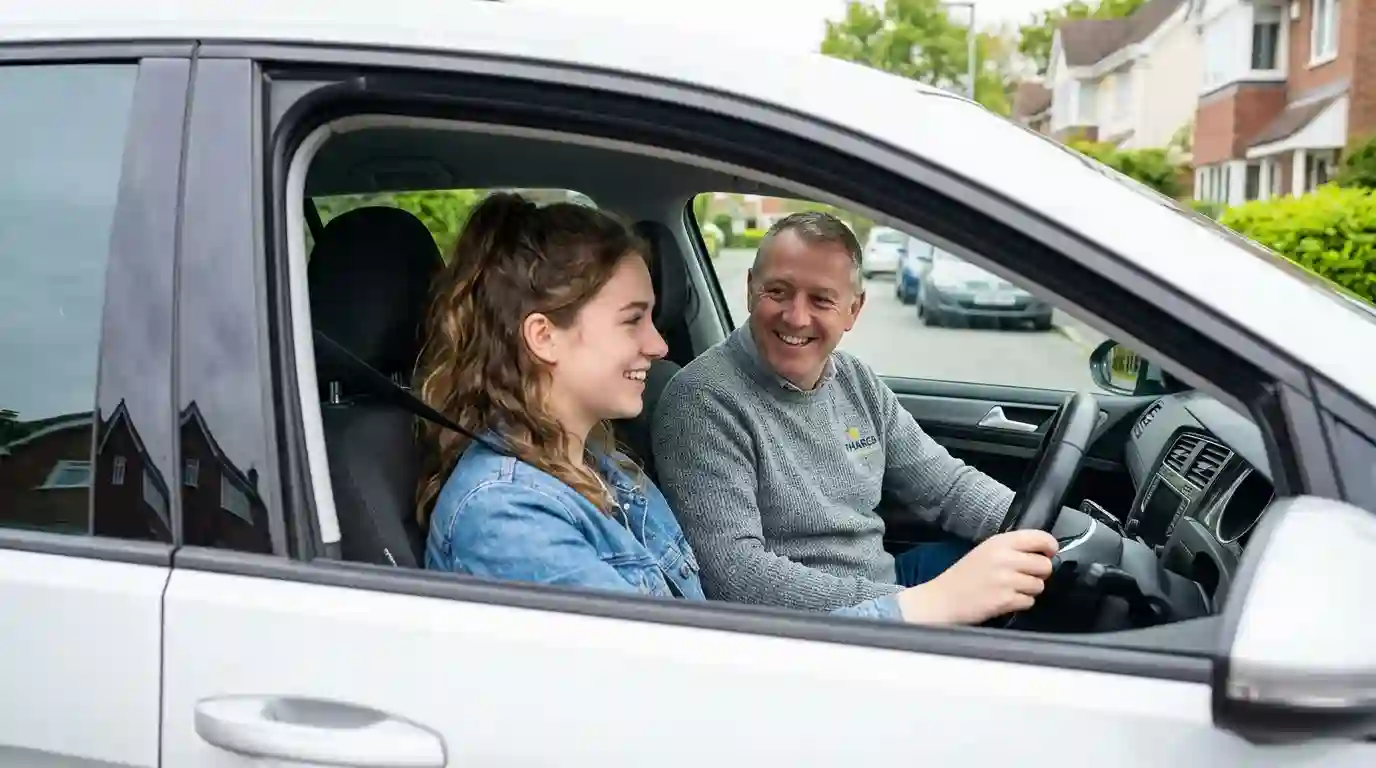
Picking a driving school is a big call, and you’re right to take it seriously. You’ll spend dozens of hours in a small car with one person, and that choice shapes your cost, your confidence, and your test result. This guide shows you how to choose the best driving school using checks you can finish in one evening.
Here’s the quick answer. Pick an instructor with a valid DVSA badge, a teaching style that suits you, clear pricing, and knowledge of your local test routes. Then book a trial lesson before you pay for a block.
What Makes a Driving School the Right Choice?
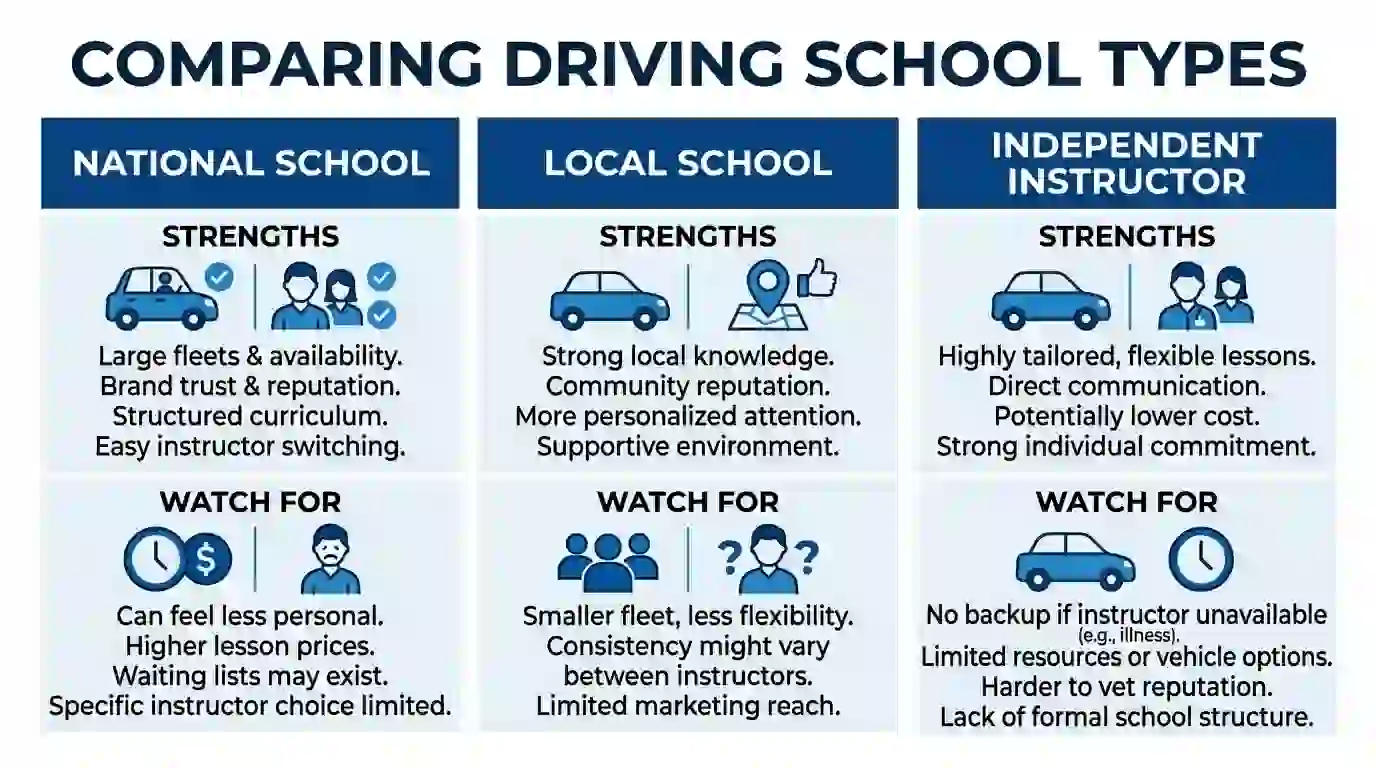
The best driving school is the one that suits your budget, schedule, and learning pace while employing qualified, patient instructors. No single school wins for everyone. A nervous adult, a teenager on a tight budget, and a learner with a test date booked each need something different.
Most instructors are self-employed, even when they work under a big school’s name. Anyone learning how to choose the best driving school should start with the instructor, not the logo. This is how the options compare in the driving school vs. independent instructor debate.
| Option | Strengths | Watch for |
| National school | Many instructors, online booking, cover if yours is ill | Quality varies between instructors |
| Local school | Local reputation, careful matching | Fewer available time slots |
| Independent instructor | Often flexible on price and times | Less backup, fewer lesson formats |
Compare Teaching Style and Instructor Quality
Every student processes information differently. Some thrive under structured, step-by-step coaching, while others need a calm, relaxed environment to manage nerves.
When evaluating an instructor, focus on these essential traits:
- Patience: They remain calm when you make mistakes, using errors as teaching moments.
- Clarity: They explain junctions, roundabouts, and maneuvers clearly without relying on confusing jargon.
- Punctuality: They start and end lessons on time, giving you every minute you paid for.
- Progress Tracking: They keep a clear log of your skills so you know exactly where you stand.
Compare Prices Without Being Misled
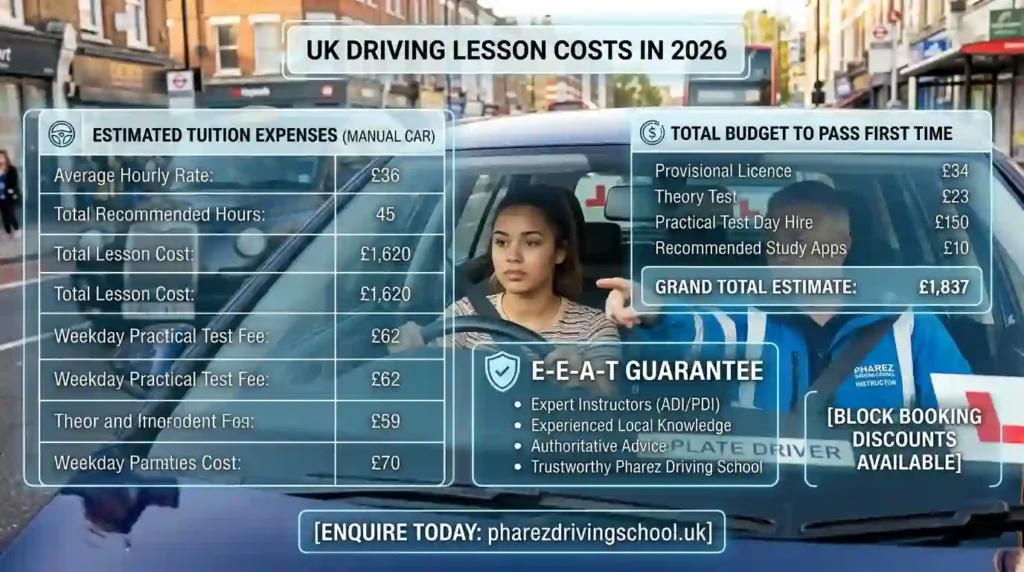
Lesson rates in the UK generally range between £35 and £45 per hour, though prices vary depending on location and gear format. Lower prices don’t always mean better savings.
| Feature | Low Hourly Rate (£30–£34) | Quality Standard Rate (£36–£45) |
| Instructor Status | Often PDIs (Trainees) | Fully Qualified ADIs |
| Lesson Structure | Less progress tracking | Clear, targeted syllabus |
| Average Hours to Pass | 50+ hours | 35–45 hours |
| Total Expected Cost | £1,500 – £1,700+ | £1,300 – £1,600 |
A low hourly rate can cost you more. If a cheaper instructor needs ten extra lessons, you’ve lost money and time, much like buying cheap boots that split within a month. Learner insurance is a separate cost if you’ll also practise in a family car.
Pharez Driving School lists every rate on its Pricing Packages page, so you can compare before you call.
Driving School vs Independent Instructor: Which Is Better?
Choosing between a driving school and an independent instructor depends on whether you value central booking support and vehicle backup over direct, one-on-one personal communication.
- Driving Schools: Provide structured lesson plans, online booking systems, customer support, and access to replacement cars if an instructor’s vehicle breaks down.
- Independent Instructors: Often deliver highly tailored, flexible schedules and lower prices because they operate without brand franchise fees.
Local Knowledge and Test Centre Routes
Local expertise makes a massive difference during your driving test. An instructor who knows the local area understands tricky junctions, multi-lane roundabouts, complex speed transitions, and common examiner routes near your local test centre.
They won’t just teach you how to drive; they’ll help you master the exact road conditions where you’ll be tested.
Choose the Right Lesson Type for Your Needs
Matching your training format to your lifestyle ensures steady progress and keeps your learning on track.
Manual vs Automatic Tuition
- Manual Lessons: Give you a full licence to drive both manual and automatic cars. Manual cars require clutch control and gear changes, which takes extra time to master.
- Automatic Lessons: Allow you to focus entirely on steering, braking, and hazard perception without worrying about stalling or clutch control. Automatic tuition often helps learners pass faster, though your licence will restrict you to automatic vehicles.
Weekly Sessions vs Intensive Courses
- Weekly Driving Lessons: Spreading 1 to 2 hours of instruction per week allows time to process each lesson and fits easily around school, college, or work commitments.
- Intensive Courses: Compact 20 to 40 hours of tuition into one or two weeks. This works well if you have an upcoming test date booked, but it requires high concentration and upfront costs.
How do you check an instructor is DVSA approved?
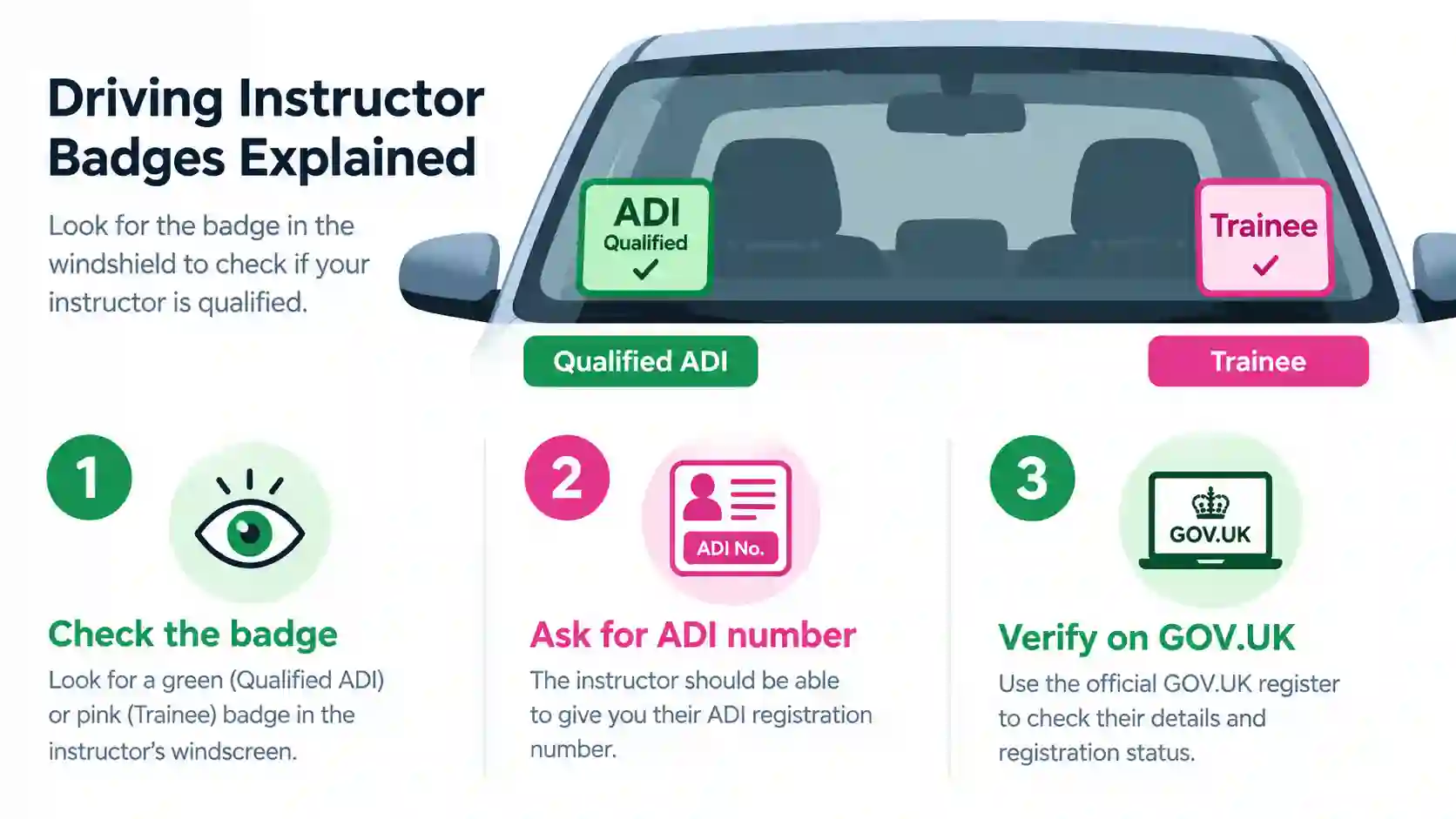
Ask to see the badge in the windscreen, then check the instructor’s details on GOV.UK. A green badge means a fully qualified Approved Driving Instructor (ADI). A pink badge means a trainee on a licence. Anyone charging for lessons without one of these is breaking the law.
ADIs also pass a criminal record check and renew their registration every four years. They sit Standards Checks too, where a DVSA examiner grades their teaching out of 51. A score of 43 or more is Grade A, and 31 to 42 is Grade B.
Pink-badge trainees have passed the first two ADI tests and are working towards the third. Many teach well, so ask who trains and supervises them.
Do pass rates show which school is best?
Not on their own. The DVSA publishes pass rates by test centre, not by driving school, so any school figure comes from the school itself. Ask how it’s calculated, then weigh it alongside reviews and the average number of lessons its learners need.
A fair answer names the time period and counts first-time passes. A school that dodges the question deserves a second look. Treat a headline pass rate like a restaurant’s “best in town” sign: it’s a claim, not proof.
What to Do If You Need to Switch Instructors
If your instructor is constantly on their phone, shows up late, or makes you feel anxious, you don’t have to stay with them. Learning to drive is a major financial investment, and you deserve a supportive environment.
Switching instructors is straightforward. Politely inform your current instructor that you’re pausing lessons, request a refund for unused block-booked hours, and transfer your progress log to a new provider.
Why do local knowledge and test centre routes matter?
Local instructors know the junctions, roundabouts and speed changes that appear on routes near your test centre. Practising them builds familiarity, so test day feels like another lesson. Ask any instructor how often they take learners around your nearest test centre’s routes.
If you search for the best driving school near me, check where the instructor actually teaches. An instructor who covers six towns may rarely visit yours. Ask which test centre they use most and how many of their learners test there.
Which lesson type suits your needs?
Weekly lessons suit most learners, semi-intensive courses suit people with a test booked, and intensive courses suit those who can drive full days. A manual pass lets you drive both types of car, while an automatic pass covers automatics only.
Match the format to your situation:
- Nervous learners: quiet roads first, shorter sessions and a calm instructor.
- Adult learners: flexible times and longer lessons if you’ve got a busy week.
- Teenagers: a pace that fits school or college, with parents arranging private practice.
- Test booked: semi-intensive lessons plus a mock test.
- Returning or overseas drivers: refresher lessons to rebuild habits.
Check the car as well. It should be clean, have dual controls and resemble the car you’ll drive after passing. Ask about mock tests and theory test support too.
How to Choose the Best Driving School in London
How to choose the best driving school in London comes down to the same checks, plus a few city rules. Traffic is denser, bus lanes and busy junctions come up early, and prices usually sit higher.
Test centres differ in waiting times and difficulty, so pick an instructor who teaches around yours. Confirm the pick-up area, ask about waiting lists and check that your lesson times avoid the worst rush hours. A well-matched local instructor saves you hours of learning roads from scratch.
Final Thoughts
Knowing how to choose the best driving school comes down to four checks: a valid badge, a good fit, clear prices and local test knowledge. Book a trial lesson, trust your gut and switch if it isn’t working.
Ready to start?Contact Us at Pharez Driving School and we’ll match you with a suitable instructor.
People Also Ask (PAA) Insights
How many driving lessons do you need on average?
Most learners in the UK need around 45 hours of professional tuition combined with 20 hours of private practice to reach test standard. However, structured lessons with a qualified ADI can reduce these total hours.
Is it better to learn in a manual or automatic car?
Learning in a manual car grants you a licence for both manual and automatic vehicles. Learning in an automatic car is easier because you don’t have to manage gears or clutch control, but your licence will restrict you to automatic cars.
How do I check if my driving instructor is legitimate?
Look for a valid green octagonal badge displayed in their car windscreen. You can also verify their ADI registration number directly through the official GOV.UK database.
Is a driving school better than an independent instructor?
Neither wins outright. Schools offer backup instructors, online booking and structured packages. Independent instructors often offer flexible rates and times. Both can be excellent or poor. The individual instructor’s quality, badge and fit for you matter more than the business model.
Should you choose a male or female instructor?
Choose whichever makes you comfortable. Skill depends on training and experience, not gender. If you’d learn better with a female instructor, ask schools for one when booking, and say so before you commit to a block of lessons. Many schools can match you either way.