
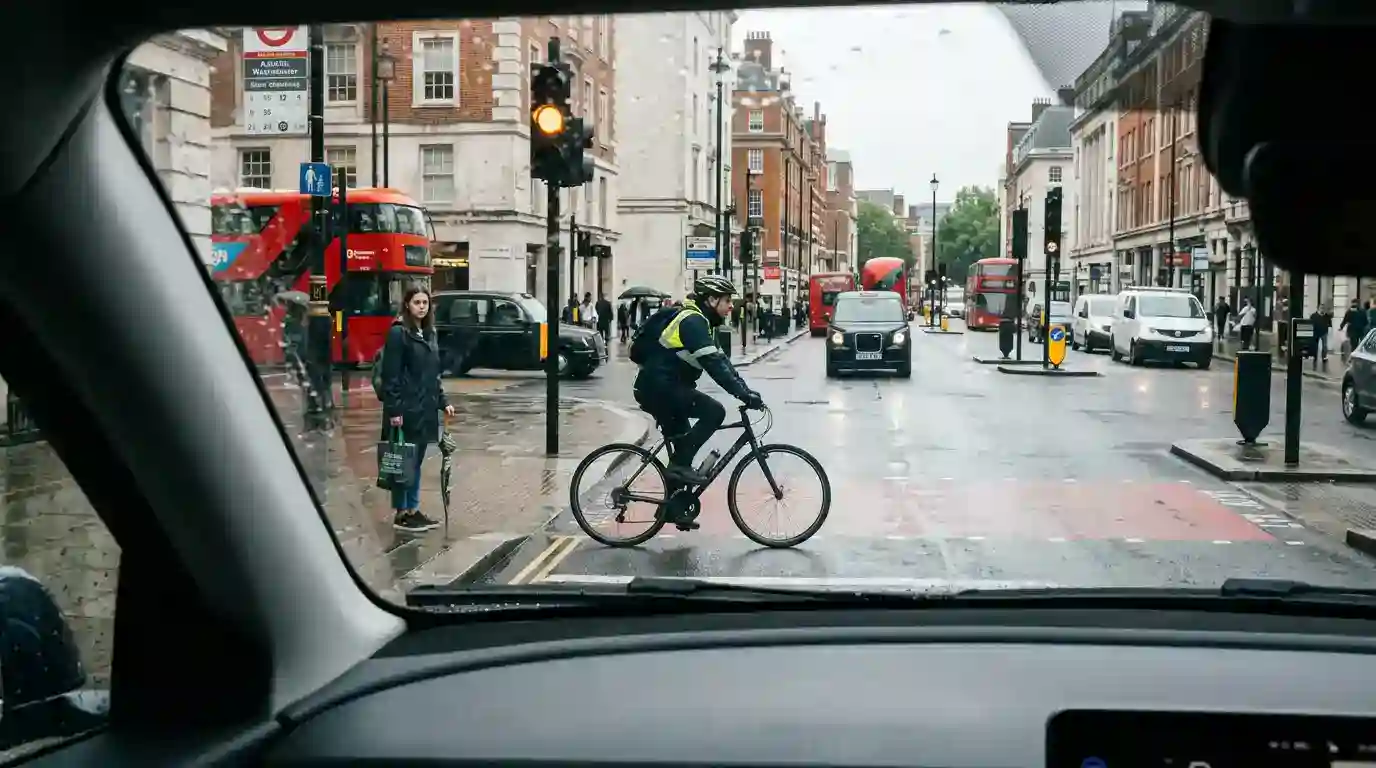
You’ve passed the theory test. You know the Highway Code back to front. So why do so many new drivers still get caught out in their first year behind the wheel? It’s rarely about knowing the rules. It’s about whether you actually see what’s happening around you before it becomes a problem.
If you’re searching for what is the most important skill for a driver, here’s the short answer: it’s hazard perception, the ability to spot danger early and react before it turns into a crash. Everything else you’ll read below builds on that one idea, so stick with me and I’ll show you exactly why it matters and how you build it.
The Most Important Skill for a Driver: Hazard Perception & Awareness
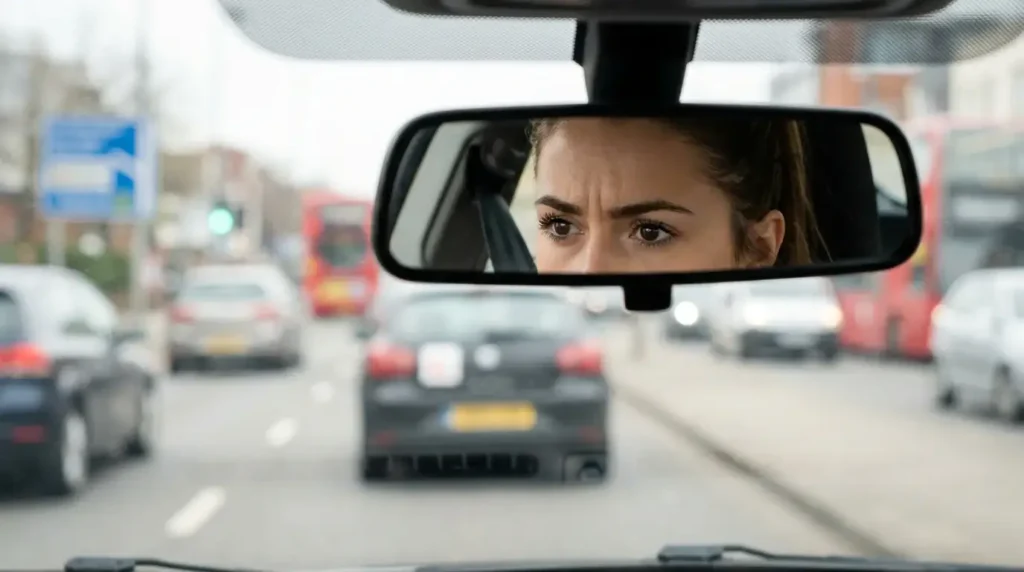
Hazard perception is the single most critical skill because it acts as your early warning system on the road. It allows you to process changing situations, predict potential dangers, and take preventive action before an emergency occurs. Without strong situational awareness, even expert steering skills cannot prevent a crash.
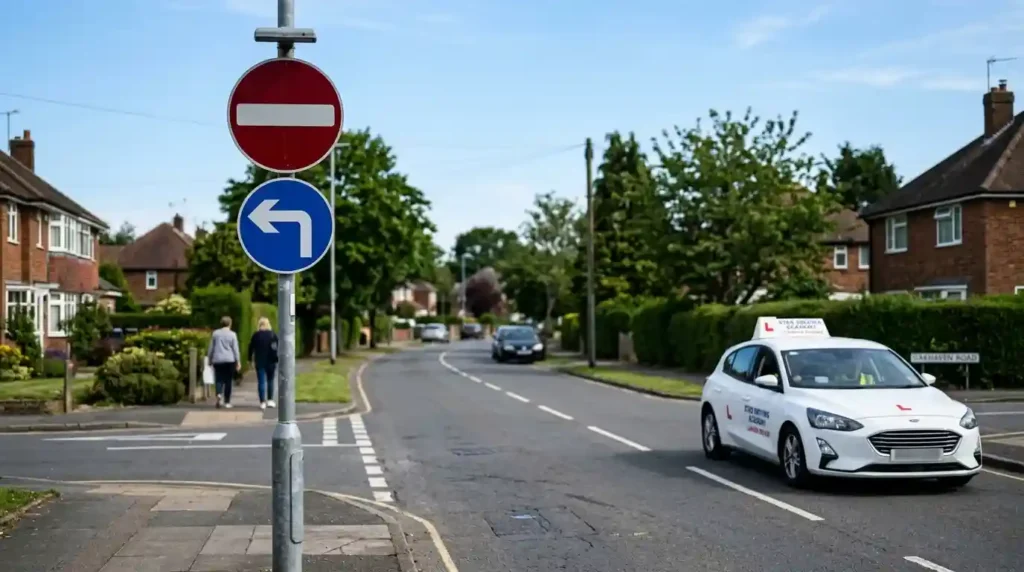
Every time you get behind the wheel, your brain processes hundreds of moving pieces. You’re tracking road markings, speed limits, nearby pedestrians, and unpredictable traffic. Drivers with sharp observation skills spot subtle clues early. They notice a ball rolling across a residential street and immediately expect a child to follow.
Research from the Transport Research Laboratory (TRL) highlights that dedicated hazard perception training cuts road traffic collisions by 11.3%. This cognitive ability separates nervous beginners from competent, safe motorists.
Why Observation Is So Important When Driving
Observation forms the core foundation of the DVSA’s Mirror-Signal-Manoeuvre (MSM) routine. Proper observation ensures you make decisions based on real road facts rather than risky assumptions.
When you fail to scan your environment thoroughly, you create dangerous blind spots. Effective observation isn’t just about staring straight ahead. It requires continuous scanning of your interior and door mirrors every 5 to 8 seconds.
- Early Detection: Looking 12 to 15 seconds ahead on open roads gives you time to adapt to braking traffic.
- Blind Spot Security: Checking over your shoulder before changing lanes prevents side-swipe collisions.
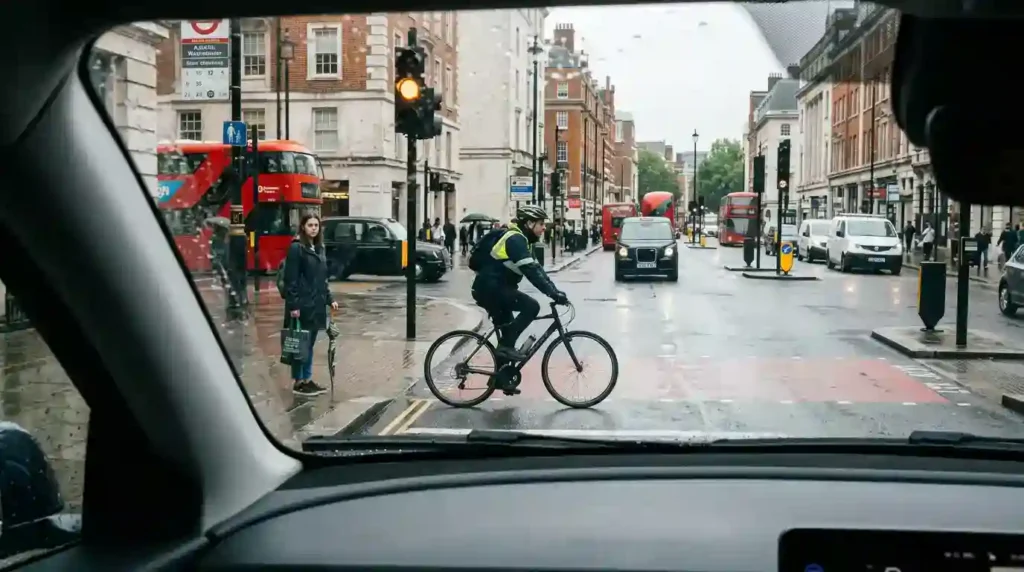
- Junction Safety: Looking twice for vulnerable road users like cyclists and motorcyclists saves lives.
Supporting Skills Every Safe Driver Needs
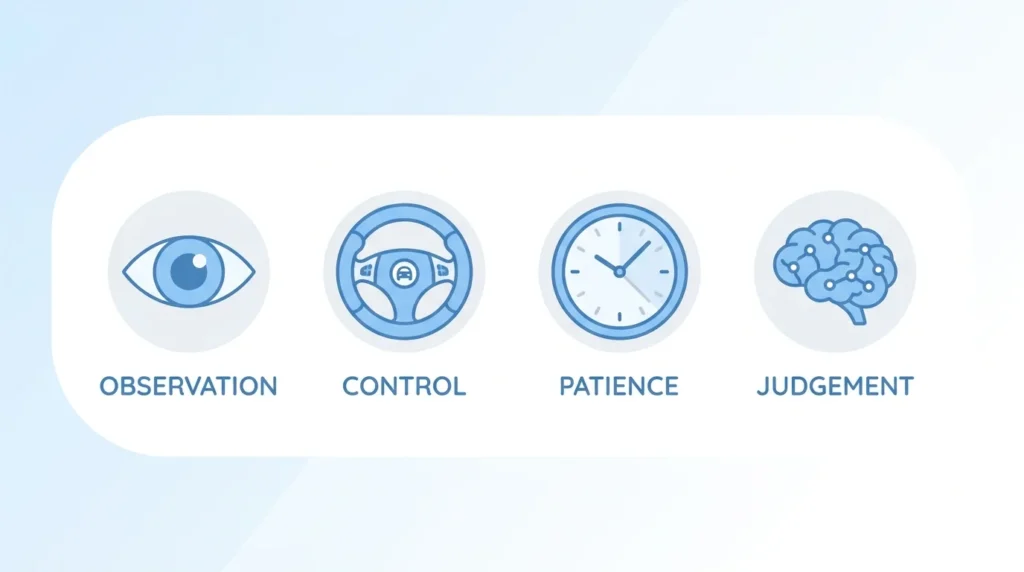
Hazard perception sits at the top, but it doesn’t work alone. A good driver builds a small set of supporting habits around it.
Judgement and decision-making. Spotting a hazard means nothing if you freeze or overreact. Good judgement means choosing the right response, brake, ease off, or hold your line, in the second or two you actually have.
Patience and self-discipline. Tailgating, rushing amber lights, and overtaking on a blind bend all come from impatience, not a lack of skill. Self-discipline is what stops a bad mood from becoming a bad decision.
Calmness and confidence. Traffic jams, aggressive drivers, and sudden weather changes test your composure. A calm, confident driver processes a hazard faster than one whose heart rate has spiked.
Vehicle control. Clutch control, steering, and smooth braking still matter. They free up your mental bandwidth so you can focus on watching the road instead of wrestling with the pedals.
Practical Driving Skills vs. Cognitive Driving Skills: What’s the Difference?
Practical driving skills are physical actions, like steering, changing gear, and parking. Cognitive driving skills are mental processes, like observation, judgement, and decision-making. Both matter, but cognitive skills determine whether a driver reacts correctly to danger, while practical skills only determine how smoothly they carry out that reaction.
New drivers often focus on practical skills because they’re easier to practise and easier to measure. You either park within the lines or you don’t.
Cognitive skills are harder to see, which is exactly why they get overlooked. A driver can have flawless clutch control and still miss a pedestrian stepping off the kerb. That’s the gap most driving advice online misses: it lists skills side by side without explaining that one category (cognitive) governs the other.
How to Actually Develop This Skill
You build high-level observation skills through active mental commentary and systematic scanning routines during every drive.
Developing strong cognitive awareness takes intentional practice. You can turn basic vehicle handling into instinctive safe driving habits using these proven techniques:
- Practice Commentary Driving: Speak your observations out loud while driving. Mention upcoming side roads, braking indicators, road surface changes, and pedestrian activity. This forces your brain to stay locked into the environment.
- Apply the System of Car Control: Use the DVSA-approved Information, Position, Speed, Gear, Acceleration framework. Take in information continuously before altering your position or speed.
- Expand Your Horizon: Stop staring directly at the bumper in front of you. Scan high and wide across the entire road landscape.
How the Most Important Driving Skill Helps You Pass Your Practical Test
DVSA’s current guidance lists not making effective observations at junctions among the top reasons for failing a driving test. It also highlights mirror use, positioning, speed and responses to signs and road markings.
At a junction, a driver needs to:
- Observe the road.
- Check for approaching traffic.
- Judge speed and distance.
- Choose a safe speed.
- Position correctly.
- Proceed only when safe.
The same thinking applies at roundabouts, pedestrian crossings, lane changes and when moving off.
DVSA guidance also describes the MSM routine, meaning Mirrors, Signal, Manoeuvre, and the PSL routine, meaning Position, Speed, Look. These routines help drivers organise observation and actions around hazards.
Pricing Packages
Developing important skills for drivers requires professional guidance tailored to your learning pace. At Pharez Driving School, our structured lessons focus on practical mechanics alongside deep hazard perception training.
Check out our transparent Pricing Packages to find structured tuition options designed to build long-term confidence on UK roads:
| Package Option | Target Learner | Core Focus |
| Introductory Assessment | Novices & Beginners | Cockpit setup, vehicle controls, basic moving off |
| Standard Hourly Tuition | Weekly Learners | MSM routines, junction work, road positioning |
| Pass Plus / Advanced | Newly Qualified Drivers | Night driving, motorway navigation, adverse weather |
FAQs: What is the Most Important Skill for a Driver?
What is the #1 reason learners fail the UK driving test?
Lack of effective observation at junctions is the leading cause of UK driving test failures. Candidates routinely fail by pulling out without scanning properly for oncoming traffic, cyclists, or pedestrians.
How can I improve my hazard perception skills fast?
You can improve hazard perception by practicing CGI test clips and performing commentary driving as a passenger. Actively call out potential risks like parked vans, pedestrian crossings, and side roads ahead.
Is confidence or caution more important for new drivers?
Balanced confidence built on solid hazard awareness is best. Overconfidence leads to risky speeding, while excessive hesitation creates dangerous traffic confusion.
Can driving skills decline over time?
Yes, driving skills decline when bad habits like lazy mirror checks, tailgating, or phone distractions slip in. Refreshing your knowledge of The Highway Code keeps your awareness sharp.
What do most learner drivers struggle with?
Most learner drivers struggle with scanning far enough ahead and checking mirrors early enough. These are observation habits, not physical skills, which is why they take longer to develop than gear changes or steering.