
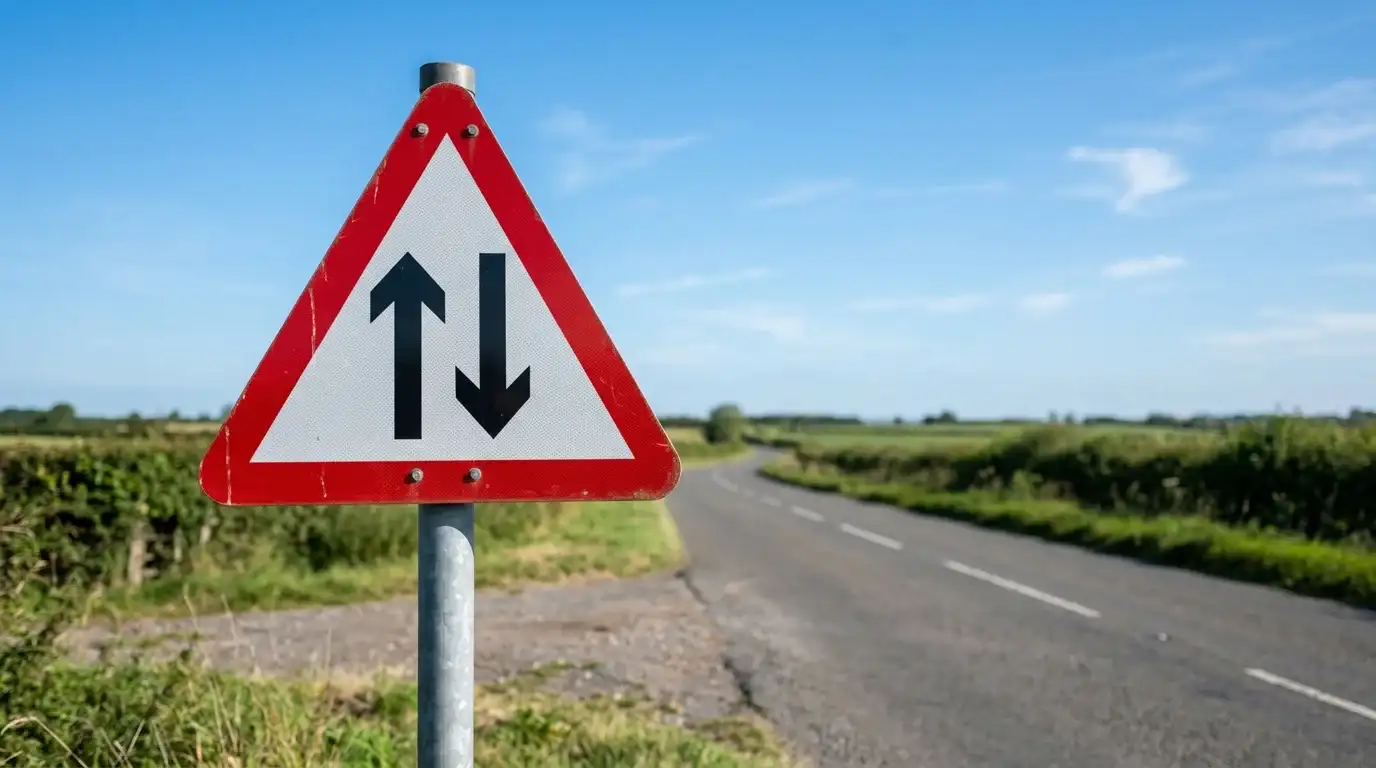
You see a red triangle on the road, and you don’t know what it is telling you. That’s a good place to be. The average student will be shown dozens of indicators in a course and will truly only understand a handful.
What is the two-way traffic sign in one queue? Before we go into the intricacies, here is the brief explanation. It’s a sign stating the road ahead is two-way, usually just after the conclusion of a one-way road. Stay with us, and by the end of this page, you will know exactly what it looks like, where to find it, and how to respond to it on your exam and beyond.
What Does the Two Way Traffic Sign Mean?
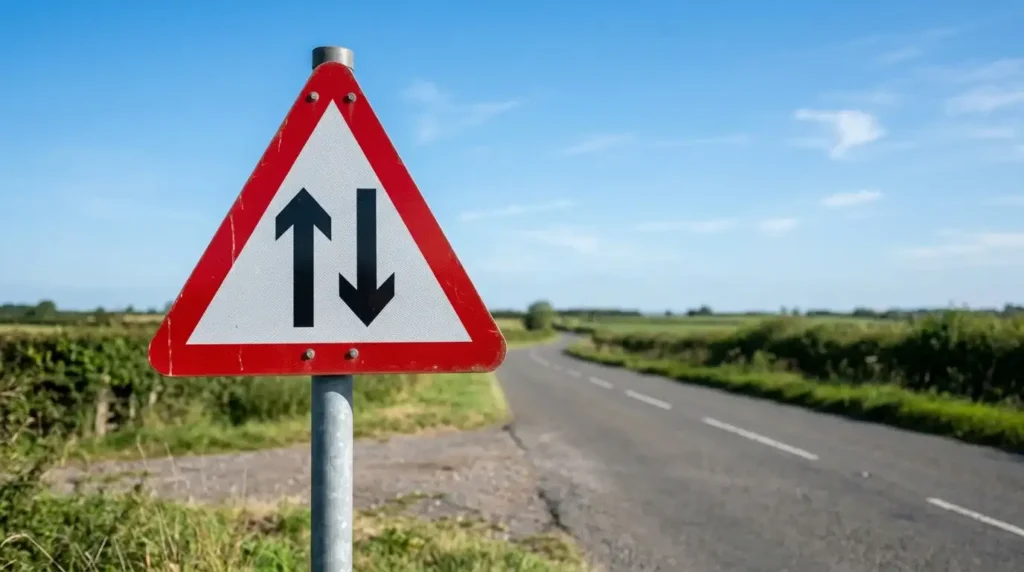
The two-way traffic sign warns drivers that they’re approaching or entering a section of road where vehicles travel in both directions. It usually appears where a one-way road ends and joins a two-way road, or where a temporary diversion changes the normal traffic flow. It’s a warning, not an instruction.
Think of it as a heads-up rather than an order. Nothing about the sign tells you to stop or slow to a set speed. It simply tells you the driving conditions are about to change, so you need to adjust your awareness and your position on the carriageway.
This matters because a lot of drivers get comfortable on a one-way road. They stop checking for traffic on both sides because, well, there isn’t any. The two-way traffic sign is there to snap that habit before it causes a problem.
What Does the Two Way Traffic Sign Look Like in the UK?
You notice a red triangle on the road, and you don’t know what it’s telling you. That’s a terrific place to be.” In a typical course, a student will see dozens of signs, yet will really only grasp a handful.
The two-way traffic sign in one queue is: So here’s the quick rundown before we get down to the nitty-gritty. It’s a sign indicating that the road ahead is two-way, immediately following the end of a one-way road. Stick around, and by the end of this page you will know exactly what it looks like, where to locate it, and how to respond to it on your exam and beyond.
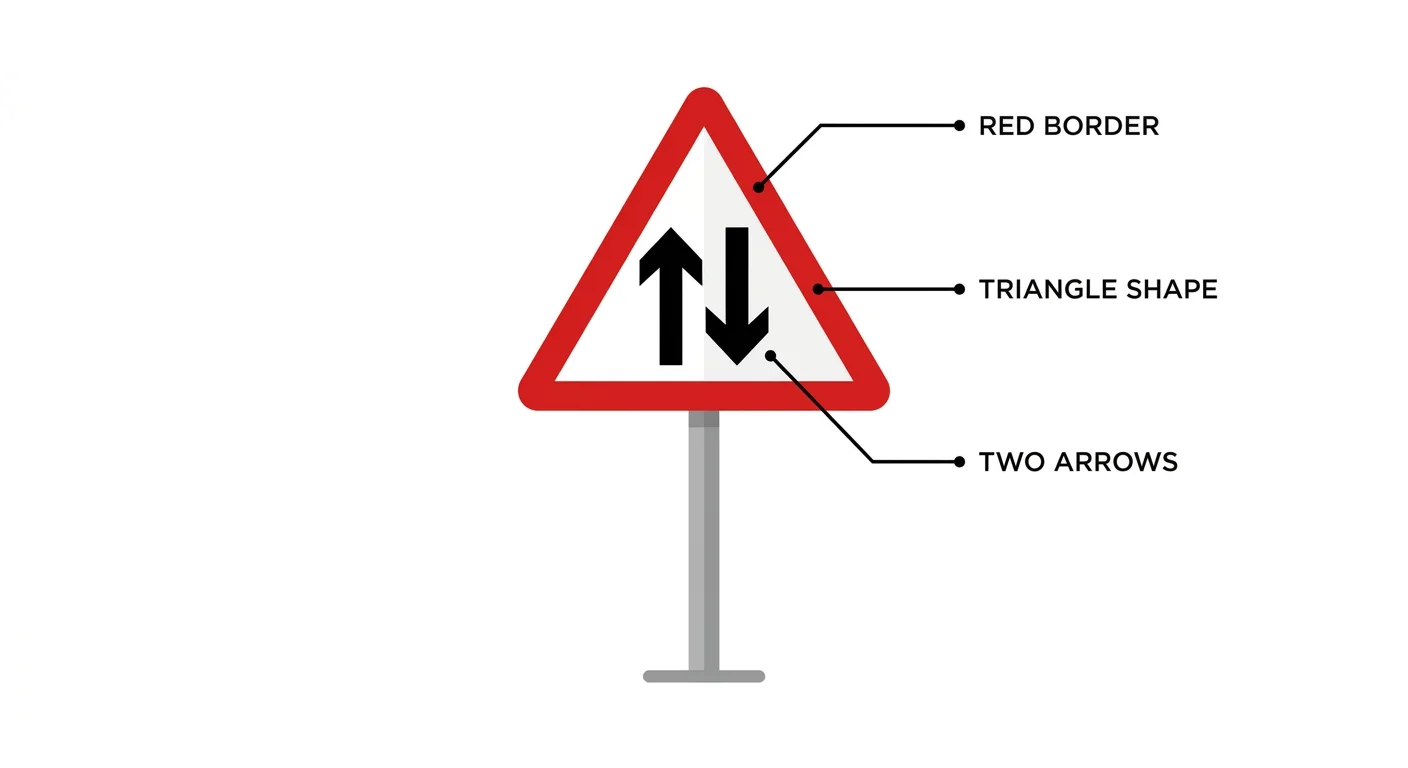
Diagram 521: Two Way Traffic Straight Ahead
Diagram 521 displays two vertical arrows pointing in opposite directions. It tells you that the road you are currently driving on is changing from a one-way setup into a two-way road directly ahead.
Diagram 522: Two Way Traffic Crosses One Way Road
Diagram 522 features two horizontal arrows pointing left and right. You will see this sign while traveling down a one-way street approaching a junction. It warns you that the road crossing ahead carries two way traffic.
Where are Two-Way Traffic Signs Usually Located?
Two-way traffic signs are used where a driver needs advance warning that traffic will resume or operate in both directions. Common situations include the end of a dual carriageway or one-way section and locations where the road layout changes ahead.
- End of Dual Carriageways: Placed where a central reservation ends and vehicles merge into a single carriageway.
- Leaving One-Way Systems: Positioned near urban exits where traffic returns to bi-directional flow.
- Roadworks and Temporary Diversions: Erected during contraflow systems to notify drivers that oncoming traffic is using an adjacent lane.
Two Way Traffic Sign vs One Way Sign
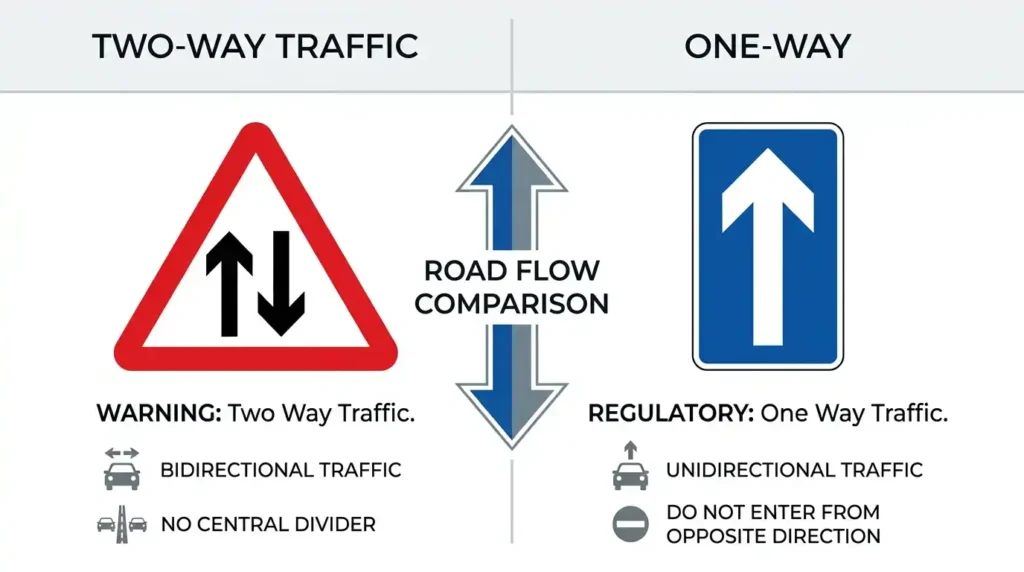
A two way traffic sign and a one way sign do opposite jobs, even though drivers sometimes mix them up.
| Feature | Two Way Traffic Sign | One Way Sign |
| Shape | Red-bordered triangle | Blue rectangle |
| Arrows | Two arrows, pointing up and down | One arrow, pointing in a single direction |
| Purpose | Warns of two-way traffic ahead | Confirms traffic flows one way only |
| Common location | End of a one-way road, bridges, diversions | Along one-way streets and gyratories |
The one way sign is confirming a rule already in place. The two-way traffic sign is warning you that rule is about to change. Mixing the two up on a busy road can catch a driver out fast, especially when merging from a narrow lane into a wider two-way road.
How to Respond When You See a Two Way Traffic Sign
When you see a two way traffic sign, apply the MSPSL routine (Mirrors, Signal, Position, Speed, Look), move to the left side of your lane, and prepare for oncoming traffic.
- Check Mirrors: Check your interior and right exterior mirrors immediately.
- Adjust Speed: Decelerate gently to give yourself more time to react.
- Position Your Vehicle: Stay well to the left of the central road marking.
- Positioning at Junctions: If emerging right from a one-way road onto a two-way road, position your car on the right side of the street before turning. Moving to the left too early or cutting corners leads to an immediate test fault.
Can You Overtake on a Two Way Road?
Yes, you can overtake on a two-way road, but only when it’s clearly safe and legal to do so. Check for road markings, oncoming traffic, and your available sightline before you commit. A broken white line permits overtaking; a solid white line does not.
The two-way traffic sign itself doesn’t ban overtaking. What it does is remind you that vehicles could be coming from the opposite direction at any point, so your window for a safe overtake gets narrower.
Give yourself more room than you think you need. A two-way road with a blind bend or a dip in the surface hides oncoming traffic longer than most learners expect, and that’s exactly where accidents happen.
Common DVSA Theory Test Questions on Two-Way Traffic Signs
Expect questions phrased like “what does this sign mean?” alongside a photo of the red triangle with the two arrows. You might also see a question asking you to pick the correct sign out of four similar-looking triangles.
Another common format asks what action you should take after seeing the sign. The correct answer usually involves checking your mirrors, adjusting your position on the road, and staying alert for oncoming vehicles rather than any single dramatic manoeuvre.
Practising with real DVSA-style images beats memorising a written description. Signs get tested visually, so train your eye, not just your memory.
Pricing Packages
If you want to master UK road signs and pass your practical test with complete peace of mind, professional instruction makes all the difference. At Pharez Driving School, we offer structured lessons tailored to your skill level.
- Beginner Driving Packages: Complete step-by-step training covering Highway Code fundamentals, vehicle control, and road positioning.
- Intensive Test Prep: Targeted sessions focused on complex junctions, dual carriageways, and mock practical driving exams.
- Refresher Courses: Perfect for foreign licence holders or qualified drivers wanting to boost their confidence on UK roads.
Explore our full Pricing Packages to find the right training plan for your budget and schedule.
Final Thoughts
Grasping what is the two way traffic sign ensures you remain observant, maintain correct road positioning, and handle junctions safely. Whether revising for your theory exam or driving on single carriageways, spotting these red triangles keeps you in full control.
Ready to get test-ready with expert UK driving instructors? Contact us at Pharez Driving School today to book your first driving lesson.
Frequently Asked Questions
Does a two way traffic sign mean the road is narrowing?
No, it does not mean the road narrows. A road narrow sign features tapering lines inside a red triangle. A 2 way traffic sign simply alerts you that vehicles move in both directions.
Is a two way traffic sign a regulatory sign?
No, it is a warning sign. Regulatory signs give direct orders and are usually circular with red or blue backgrounds.
What is the official UK Highway Code number for the two way traffic sign?
The vertical arrow sign is Diagram 521, and the horizontal crossing arrow sign is Diagram 522 under the Traffic Signs Regulations and General Directions (TSRGD).
Do I need to slow down when I see this sign?
There’s no set speed limit tied to the sign, but slowing down gives you more time to check for oncoming traffic and adjust your lane position.
What’s the difference between a 2 way traffic sign and a one way sign?
A two way traffic sign warns of vehicles from both directions, using two arrows. A one way sign confirms traffic flows in a single direction, using one arrow, and sits inside a blue rectangle rather than a warning triangle.