
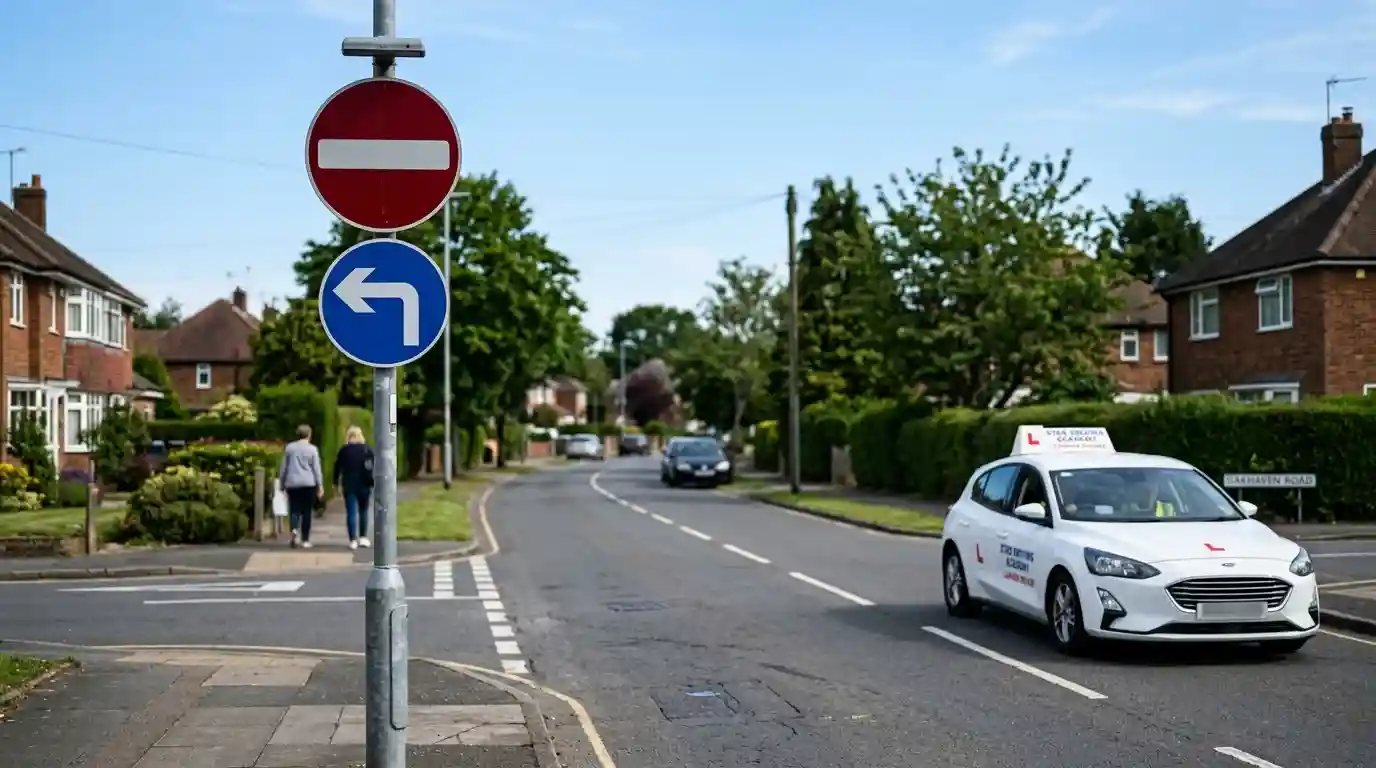
If you’re rewriting UK road signs, the shape might provide you with a quick hint about what a sign signifies. The question ‘what shape are traffic signs issuing orders?’ has a simple answer: Most signs that give directives are round. Red circles tend to be prohibitions, blue circles tend to be compulsory instructions.
Knowing the shapes of signs can make theory-test revision considerably easier. It’s the same kind of realistic inquiry that learners ask when they say things like “Is 20 lessons enough to pass?” The trick is not to memorise random pictures. Learn the shape, colour, and meaning as a set, and the signs become much easier to recognise.
The Quick Answer: Circular Signs Give Orders
Circular road signs give orders on UK roads. Signs with a red circular border are prohibitory, meaning you must not do something, such as overtaking or entering a road. Signs with a plain blue circle are mandatory, meaning you must follow an instruction, such as turning left or using a cycle lane.
That’s the rule your theory test wants you to know cold. Triangles and rectangles do something different, and I’ll get to those next. But if you only remember one shape today, remember the circle.
The Three Road Sign Shapes and What They Mean
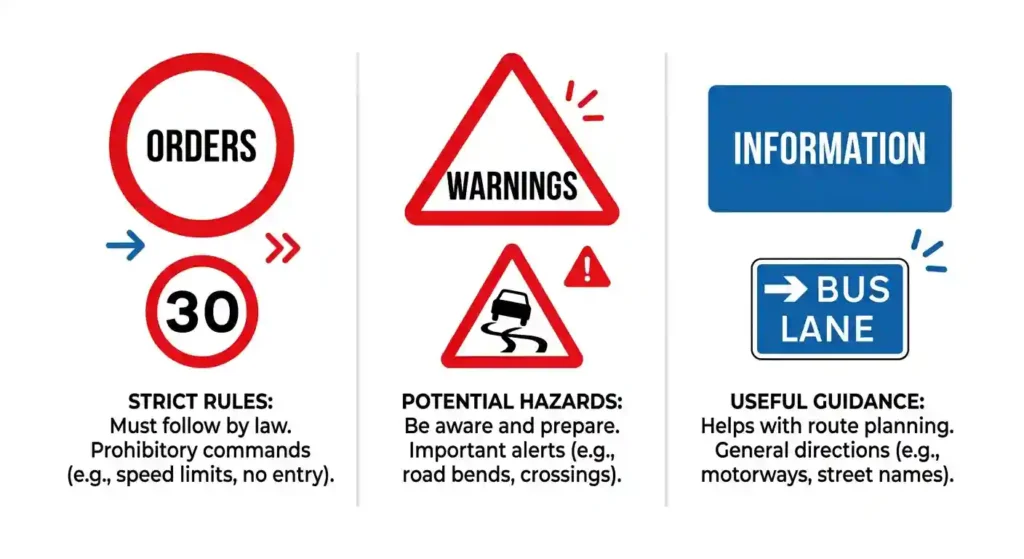
UK road signs sort into three main shapes, and each shape has one job. Circles give orders. Triangles warn. Rectangles inform.
Circular signs (orders): These are legally binding. Ignore one, and you could face a fine or points on your licence, not just a telling off.
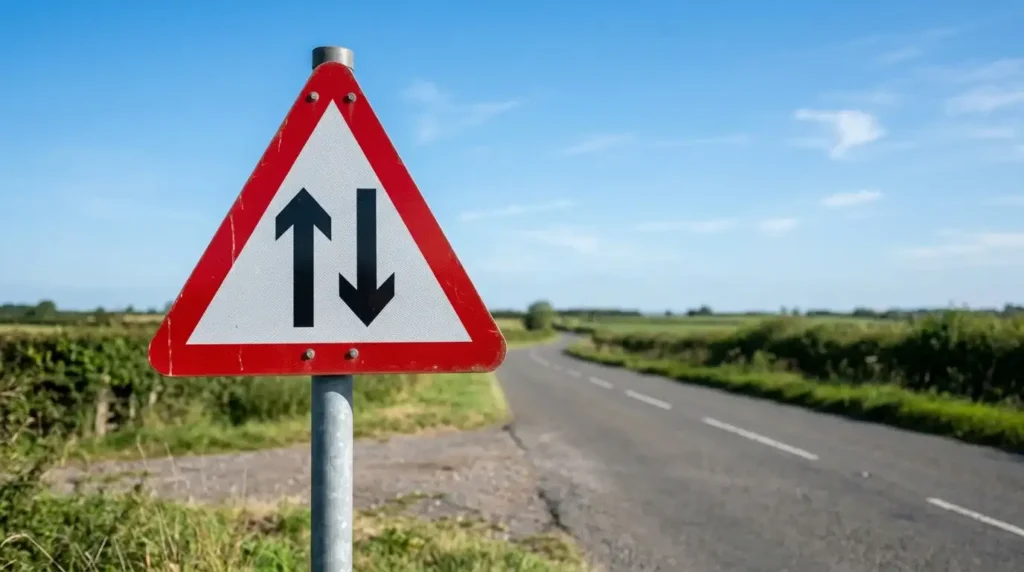
Triangular signs (warnings): These alert you to hazards ahead, like a bend, a crossing, or a hidden dip. They’re not commands, but they’re not optional to ignore either.
Rectangular signs (information): These give directions, distances, or facts about the road, such as motorway exits or parking rules. Blue rectangles handle motorway info, green ones cover primary routes, and white ones guide you on smaller roads.
Knowing which category a sign belongs to answers most of what shape are traffic signs giving orders questions in one go. The shape tells you the type of message before you even read the symbol inside it.
Red Circle vs Blue Circle: What’s the Difference?
While all circular road signs demand obedience, their colors completely change their legal message.
Red Circles: Prohibitory Signs (What You MUST NOT Do)
Red circular signs tell you what is strictly forbidden. Entering a zone marked with a red circle can lead to instant driving test failure or police prosecution.
Common prohibitory examples include:
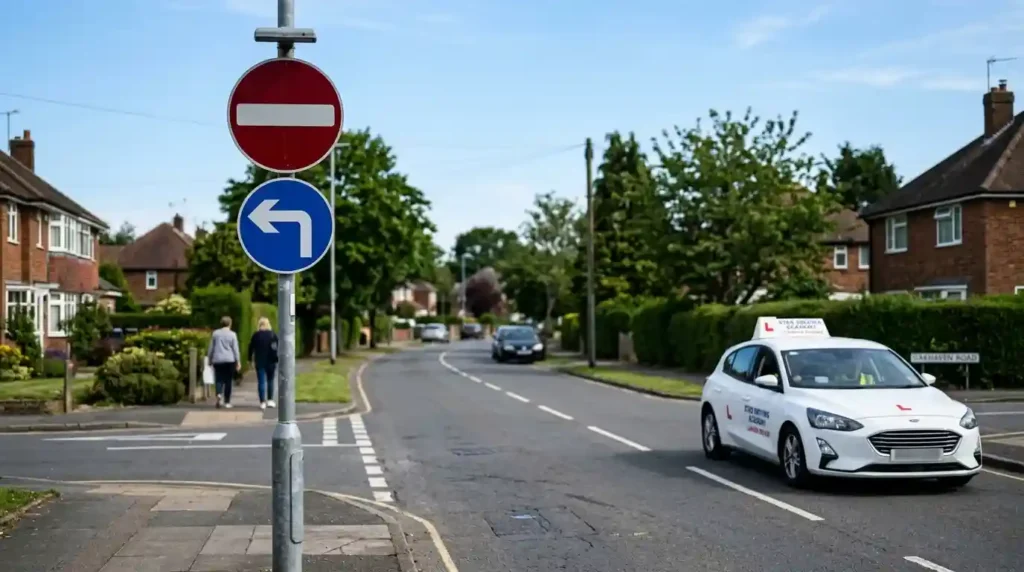
- Red circle with a white horizontal bar: No entry for vehicular traffic.
- Red circle with two cars (one red, one black): No overtaking allowed beyond this point.
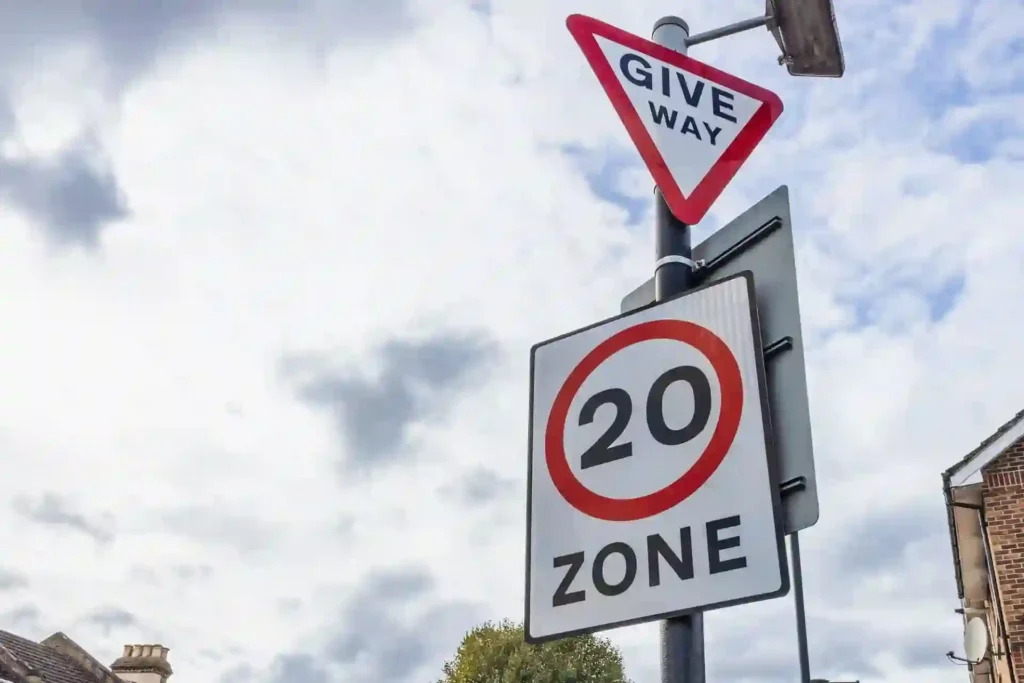
- Red circle with a number: Maximum speed limit allowed on the stretch of road.
Blue Circles: Mandatory Signs (What You MUST Do)
Solid blue circular signs give positive instructions. They tell you the required action you must take to proceed safely.
Common mandatory examples include:
- Blue circle with a white arrow pointing left: Turn left ahead.
- Blue circle with a bicycle symbol: Dedicated route for pedal cycles only.
- Blue circle with a white arrow pointing down-left: Keep left of a traffic island.
Crucial Exceptions: Order Signs That Are NOT Circular
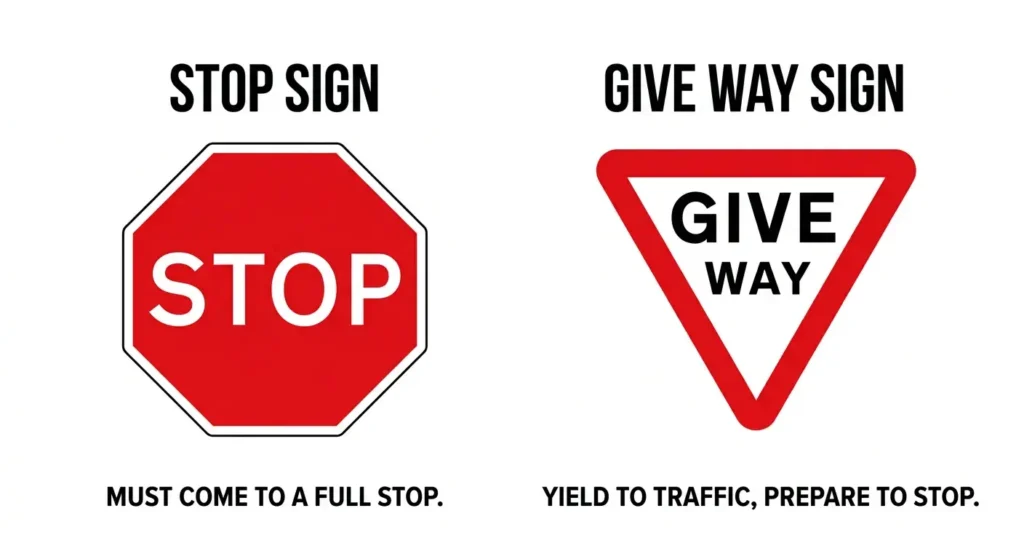
Most drivers assume every command sign is a circle, but two critical exceptions break this rule. The DVSA intentionally designed these unique shapes so drivers can recognize them even if snow or dirt covers the sign face.
The Octagonal STOP Sign
The STOP sign is an eight-sided octagonal sign that gives a mandatory order to bring your vehicle to a complete halt. It is the only octagonal sign on UK roads. You must stop completely at the transverse stop line, check for oncoming traffic, and proceed only when clear.
The Inverted Triangle GIVE WAY Sign
The GIVE WAY sign is an upside-down, inverted triangle with a red border that orders drivers to yield to traffic on the main road. While standard triangular signs act as warnings, this downward-pointing triangle carries a legal order. The unique upside-down shape ensures you recognize it instantly from behind or in bad weather.
Why Traffic Sign Shapes Matter
Shapes exist so you can react before you’ve even read the words on a sign. At 30mph, you cover 13 metres a second, so a half-second delay matters.
A circle screams “obey now.” A triangle says “watch out.” A rectangle says “here’s some information.” Your brain processes shape faster than text, which is why UK road design leans on it so heavily.
This matters most for new drivers who haven’t built up years of instinctive sign recognition yet. Once you understand what shape-based traffic signs are giving orders, reading the road ahead gets far less stressful.
Which Traffic Signs Give Orders?
The most common traffic signs that give orders include speed restrictions, no-entry signs, no-overtaking signs and mandatory direction signs.
Here are some useful examples:
| Sign | Shape | Main meaning |
| Maximum speed | Circle | Do not exceed the displayed speed |
| No entry | Circle | Vehicles must not enter |
| No overtaking | Circle | Overtaking is prohibited |
| No motor vehicles | Circle | Motor vehicles are prohibited |
| Keep left | Circle | Keep to the left |
| Ahead only | Circle | Continue ahead |
| STOP | Octagon | Stop and give way |
| GIVE WAY | Inverted triangle | Give way to traffic on the major road |
The Highway Code lists STOP, GIVE WAY and many circular prohibitory signs within its signs-giving-orders guidance.
Common Order-Giving Signs Explained
No Entry: A solid red circle with a white horizontal bar. No vehicles, including cyclists, are allowed through.
No Overtaking: A red circle showing two cars, one black and one red. Overtaking isn’t allowed here, usually due to poor visibility or a narrow road.
No Stopping (Clearway): A red cross on a blue road sign background. You can’t stop at all, not even briefly to drop someone off.
No Waiting: A single red diagonal stripe on blue. You can drop off or pick up passengers, but you can’t wait or park.
Turn Left Ahead: A blue circle with a left-pointing arrow. This is mandatory, not a suggestion.
Mini-Roundabout: A blue circle with three curved white arrows. You must give way to traffic from the right and go around it.
So when someone asks which traffic signs give orders, the honest answer is any sign wearing a circle, plus the Stop and Give Way exceptions we covered above.
How This Shows Up on Your Theory Test
Sign shape questions come up constantly on the DVSA theory test, often as multiple-choice picture questions. Examiners like testing whether you know the difference between a warning triangle and a mandatory circle at a glance.
My advice as an instructor is simple. Don’t just memorise individual signs. Learn the three shape categories first, then layer the specific signs on top, because that’s how you’ll actually recognise new signs you haven’t seen before.
Pricing Packages
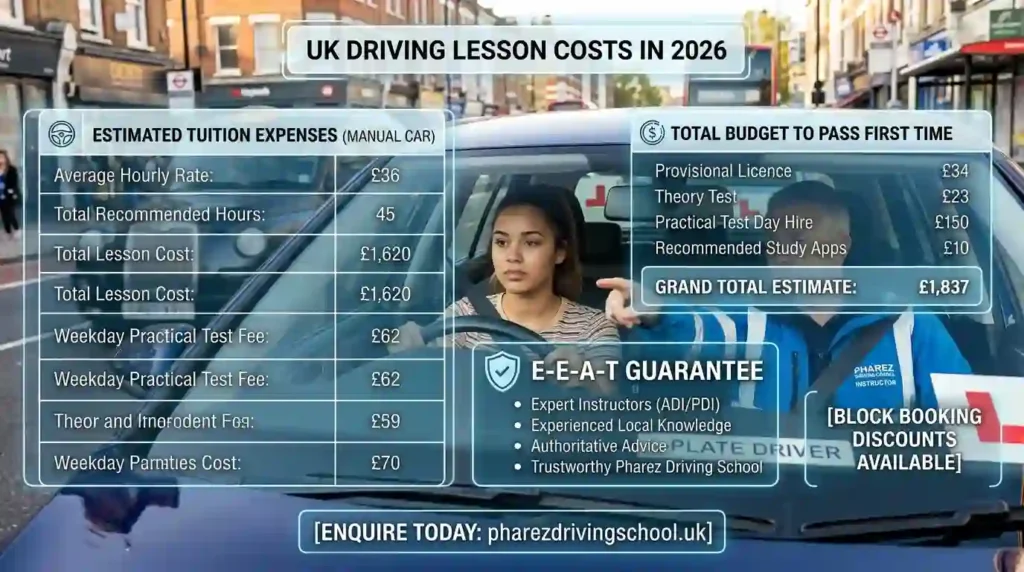
Learning your road signs is only one part of passing your test. If you’re ready to put that knowledge into practice behind the wheel, Pharez Driving School offers structured lesson packages built around your current skill level and how many hours you realistically need. You can compare our Pricing Packages here and pick a course that matches your budget and timeline.
Final Thoughts
Circular signs give orders, triangles warn, and rectangles inform, with the Stop sign and Give Way sign as the two exceptions worth remembering. Once that clicks, reading UK roads stops feeling like guesswork. If you’d like a qualified instructor to walk you through sign recognition and everything else on the syllabus, contact us at Pharez Driving School and we’ll get you booked in.
FAQs
What sign tells you what not to do?
A red circular sign tells you what not to do. These are called prohibitory signs, and they cover things like no entry, no overtaking, and speed limits you can’t exceed.
Which traffic signs give orders?
Circular signs give orders, split into red (prohibitory) and blue (mandatory) types. The Stop sign and Give Way sign are the two non-circular exceptions that also carry legal force.
How can you identify traffic signs that give orders?
Look for the circle first. If it has a red border, it’s banning an action. If it’s plain blue, it’s instructing one, and both types must be obeyed by law.
What shape are traffic signs giving orders in the UK?
Traffic signs giving orders are circular. Red-bordered circles tell drivers what they must not do, while solid blue circles give positive mandatory instructions that must be followed.
What are the two exceptions to the circular order sign rule?
The two exceptions are the octagonal STOP sign and the inverted triangle GIVE WAY sign. Both give mandatory orders despite not being circular.