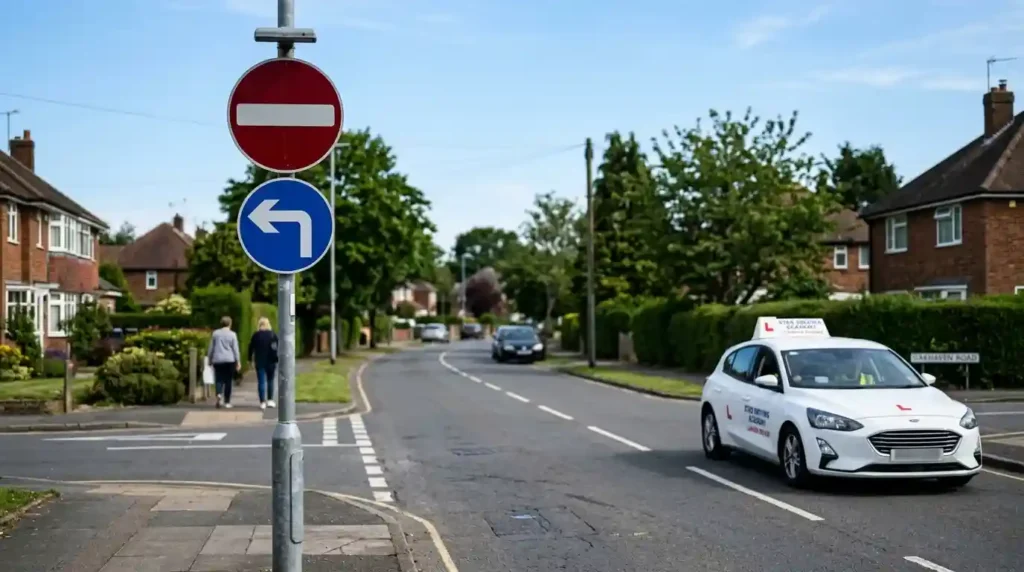

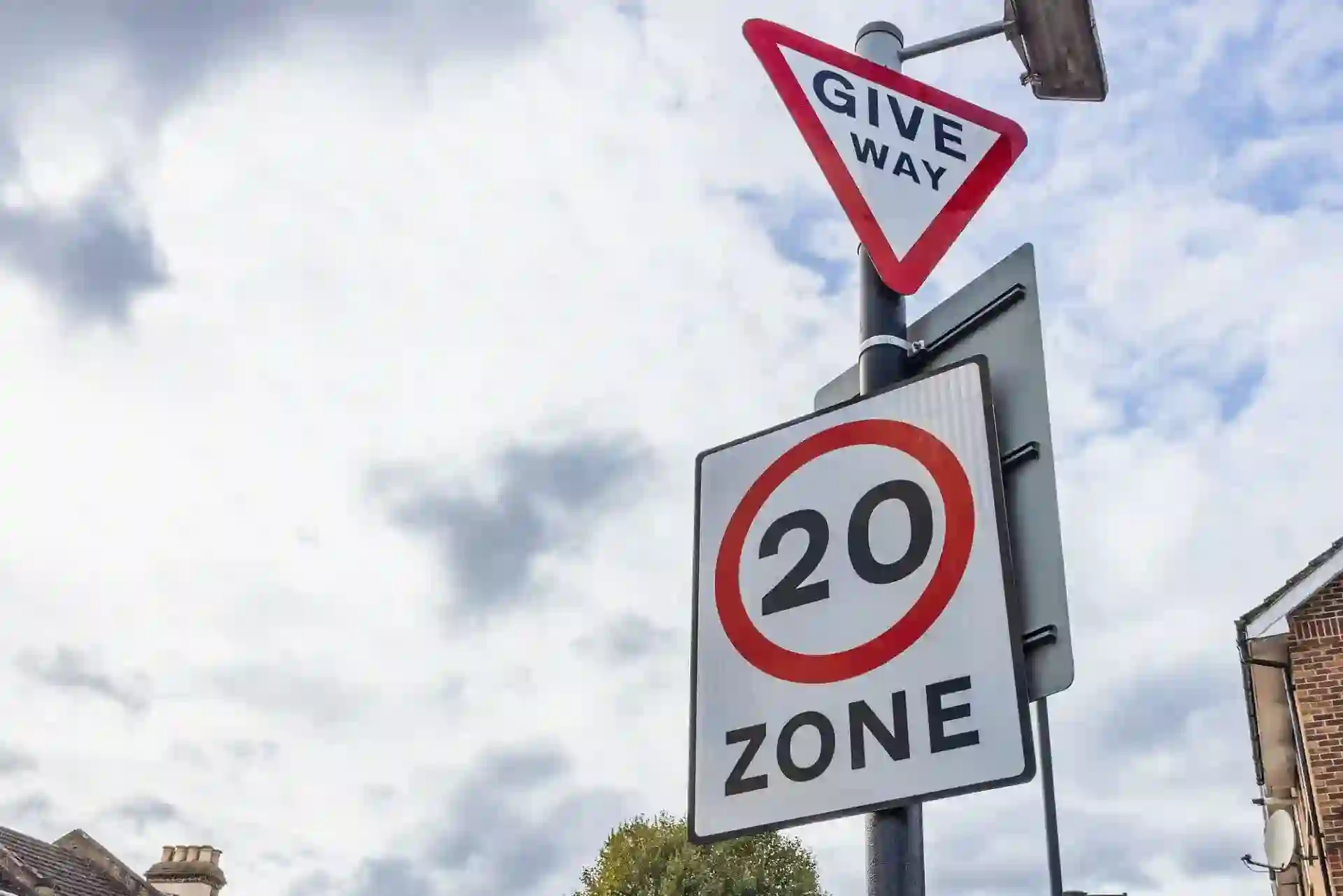
Most drivers think they know every sign on the road. Then a give way triangle gets rolled through without a second glance, and the gap between “I know this” and “I actually see this” becomes obvious.
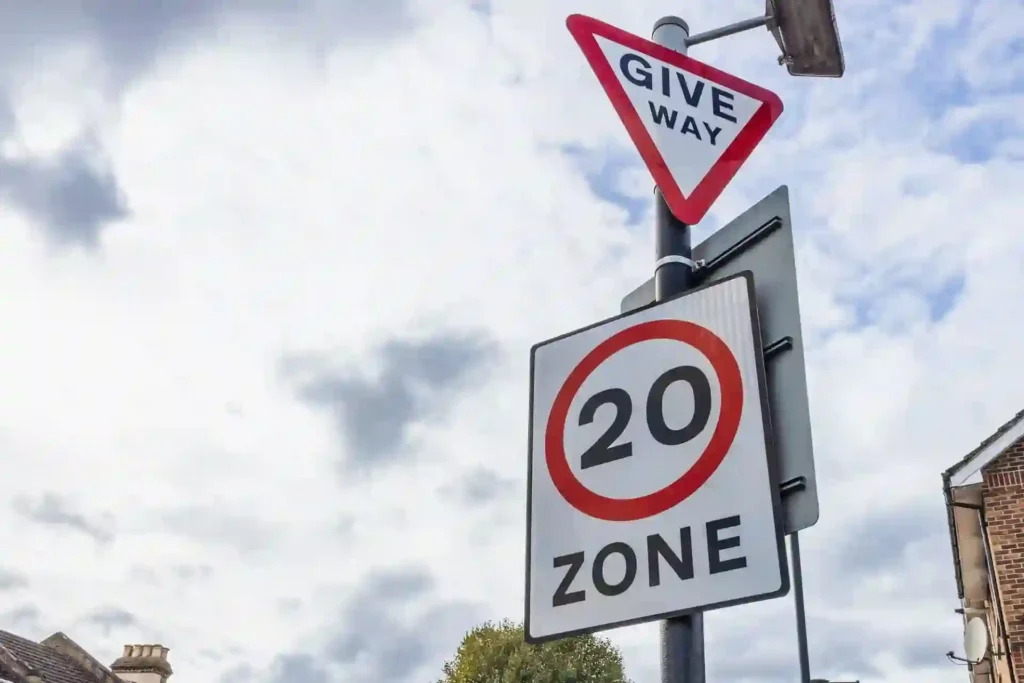
Here’s the short version: if you’ve ever wondered what the most ignored traffic sign is, it’s the give way sign. It carries no red octagon, no flashing light, nothing that screams “stop,” which is exactly why so many drivers treat it as optional. Stick with us, and we’ll cover why it happens, which signs trip up learners on the theory test, and how to stop missing the ones that matter.
Why Do Drivers Ignore Traffic Signs?
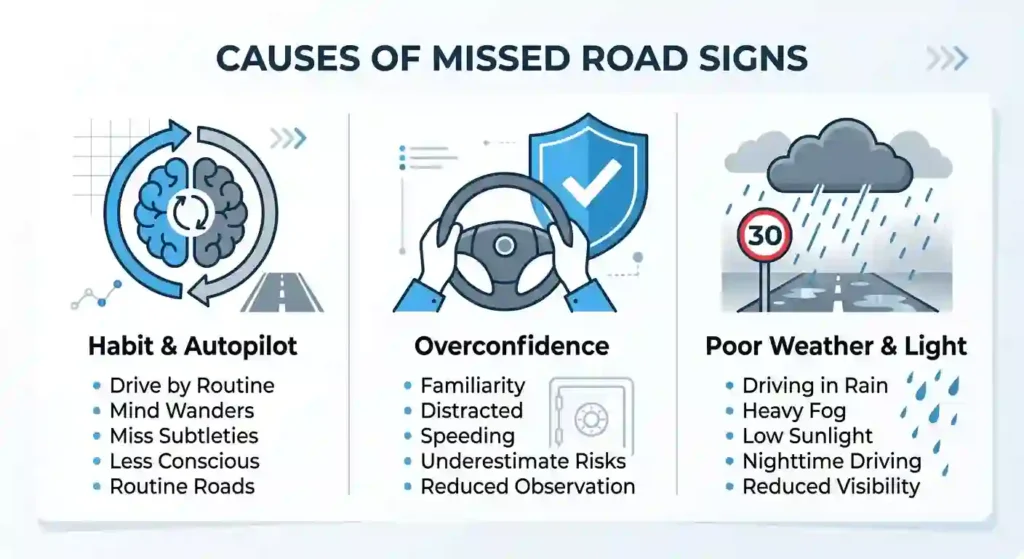
For the most part, drivers violate traffic signs out of habit, not rebellion. After a hundred trips down the same road, the brain starts running on memory and no longer actively scans for indications. Add a buzzing phone on the dashboard, or a frantic school run, and even familiar signals are missed.
There’s also a confidence problem. Experienced drivers assume they’ve “seen it all,” which slows their reaction to signs outside the usual route. New drivers face the opposite issue: too many signs competing for attention at once.
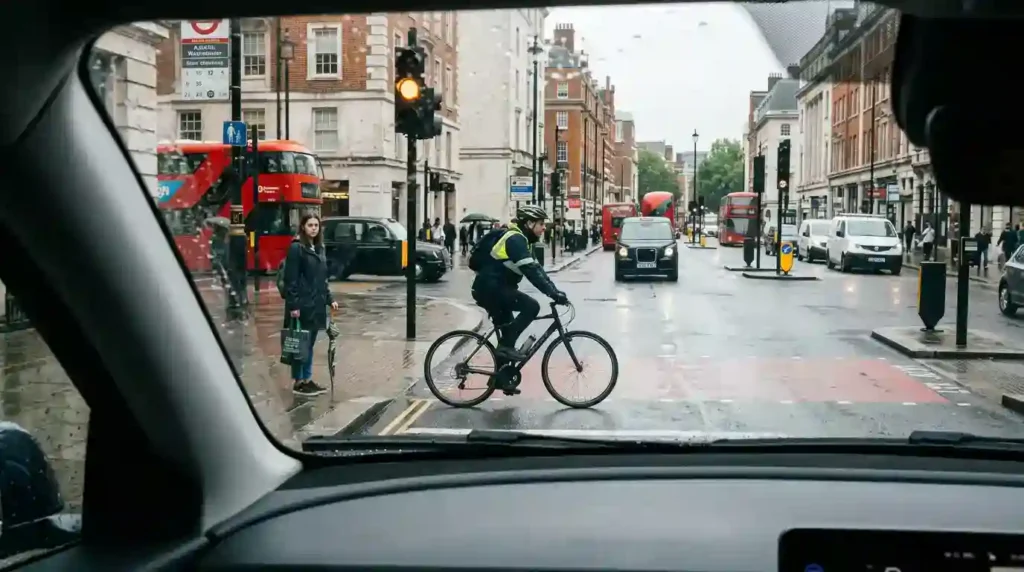
Weather and light matter too. A give way triangle on a rain-soaked road at dusk is far easier to miss than one on a dry, well-lit street.
The Top 3 Most Ignored Traffic Signs in the UK
1. The National Speed Limit Sign
This circular white marker with a black diagonal stripe causes non-stop confusion. Many drivers assume it signals a uniform 60 mph allowance regardless of the road type. In reality, it dictates exact upper limits depending on vehicle class and street layout: 60 mph for cars on single carriageways, expanding to 70 mph on dual carriageways and motorways. Driving significantly below this threshold on a clear, open road creates unnecessary congestion, while exceeding it triggers speed camera fines.
2. The No Stopping (Clearway) Sign
Featuring a bold red cross over a solid blue circular background, this sign strictly forbids stopping for any duration. Motorists frequently confuse this marker with the standard “No Waiting” indicator (a single diagonal stripe). Stopping briefly to drop off a passenger or check a map on a Clearway directly breaks traffic laws and puts other road users at risk.
3. The Give Way Sign
The downward-pointing red triangle is one of the most common symbols on UK roads, yet drivers treat it like a mild suggestion. Instead of slowing down to scan approaching lanes, drivers routinely roll straight through junctions or mini-roundabouts without easing off the accelerator, forcing oncoming traffic to brake sharply.
How Ignoring Traffic Signs Leads to Automatic Driving Test Failure
Missing a sign during a practical test isn’t a small slip. The DVSA classes it as either a serious fault or a dangerous fault, and either one ends the test on the spot.
fall into this category. Examiners aren’t looking for perfection everywhere on the route. They’re looking for consistent, correct responses to every sign a learner passes, because that’s the exact skill that keeps people safe once they’re driving alone.
This is why instructors spend so much time on sign recognition drills. It’s not busywork. It’s the difference between a pass certificate and a “not this time.
Most Ignored Signs on the UK Driving Theory Test
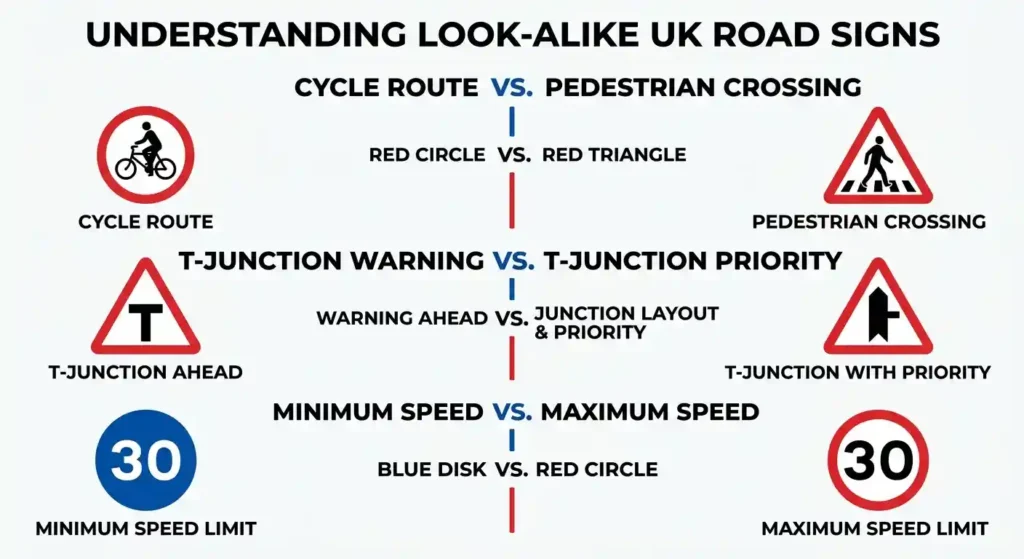
The DVSA doesn’t issue an official ‘most failed theory test sign’. It’s best not to consider any one sign a guaranteed difficult question.
The theory test’s multiple-choice questions are drawn from approved source material like The Highway Code, Know Your Traffic Signs and Driving: The Basic Skills. GOV.UK also suggests official DVSA revision resources, including traffic-sign flash cards.
Signs that can challenge learners often include less familiar examples such as:
- T-junction with priority over vehicles from the right
- Staggered junction
- Minimum speed limit
- National speed limit
- Surface dressing
- No overtaking
- Temporary road works signs
- Quiet Lane
- Tram-only routes
The key is to learn the meaning behind the sign rather than memorising its picture in isolation.
How to Stop Missing Important Road Signs
Building the habit of actively scanning, rather than passively glancing, makes the biggest difference. A few things help:
- Read the road ahead, not just the car in front. Signs sit well before the hazard they warn about, so looking further down the road gives more reaction time.
- Treat familiar routes with fresh eyes. Autopilot driving is where most missed signs happen, even on roads driven daily.
- Study sign shapes, not just individual signs. Circles instruct, triangles warn, rectangles inform. Knowing the category narrows down the meaning even for an unfamiliar sign.
- Practise with real Highway Code materials. The official DVSA-approved theory test app and the printed Highway Code cover every sign a learner driver needs, without guesswork.
- Cut distractions before the engine starts. Phones on silent and mirrors adjusted beforehand mean more attention left for the road itself.
Learn Sign Recognition the Right Way
Reading about signs only goes so far. Recognising them at speed, under pressure, with an examiner in the passenger seat takes practice with someone who can correct mistakes before they become habits.
At Pharez Driving School, sign recognition gets built into every lesson from day one, not left as a last-minute theory cram. Our Pricing Packages cover everything from first-lesson basics through to test-ready intensive courses, all with instructors who know exactly which signs trip up learners in this area.
Final Thoughts
The next time someone asks what is the most ignored traffic sign, the answer isn’t a trick question. It’s the give way sign, and it catches out new and experienced drivers alike because it relies on judgment rather than a hard stop.
Getting sign recognition right isn’t about memorising a book. It’s about building the habit of actually looking, every single drive, until it stops being a conscious effort. If you’re working toward your test, or you just want a refresher before it costs you points, contact us at Pharez Driving School and we’ll get you booked in.
FAQs
What is the most ignored traffic sign?
The give way sign is the most ignored traffic sign in the UK. It relies on driver judgment rather than a mandatory stop, which leads many drivers to misjudge oncoming traffic or treat it as optional.
What happens if you ignore a give way sign while driving?
Ignoring a give way sign can result in a collision at the junction, penalty points, and a fine. During a driving test, it’s marked as a serious or dangerous fault and ends the test immediately.
Which road sign has the highest theory test fail rate?
The cycle route sign and the T-junction with priority sign are among the most frequently missed on the UK theory test, largely because they resemble other, more familiar signs.
What happens if you get caught ignoring a Give Way sign?
Ignoring a Give Way sign can result in a fine and penalty points on your licence for careless driving. If your failure to yield leads to a collision at a junction, penalties increase significantly.
What is the most failed theory test sign in the UK?
The “No Vehicles” sign (an empty red circle) is consistently rated among the most failed theory test road signs. Theory candidates often mistake its blank center for a permissive instruction rather than a complete vehicle prohibition.