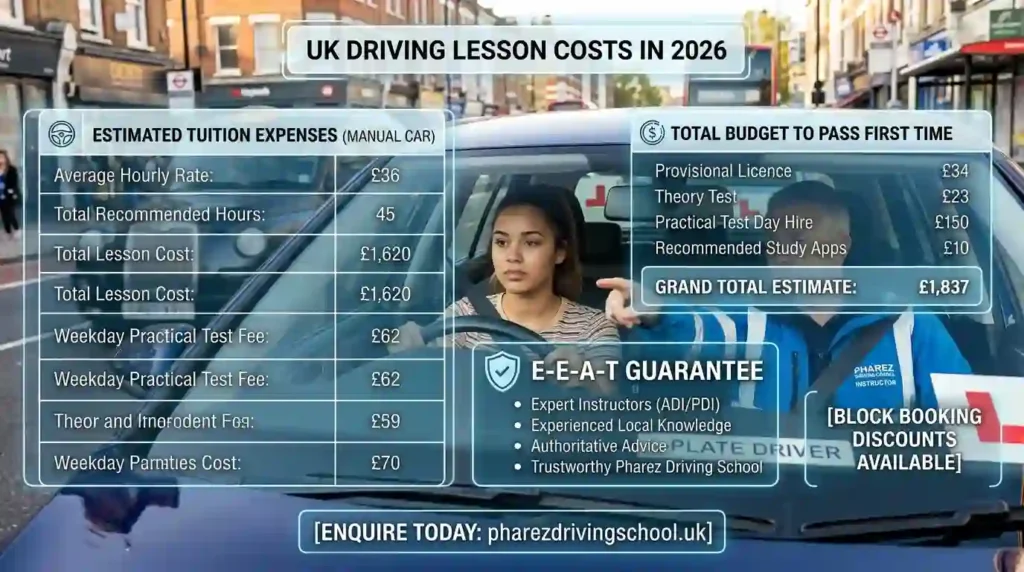


Learners need 2 to 4 hours of professional driving lessons per week spread across two-hour sessions. Taking two hours twice a week balances skill memory and rapid progress without burning you out. This pacing helps you hit the average 45-hour national standard faster and prevents costly lesson memory loss.
Finding the right lesson schedule makes a huge difference to your wallet and your confidence. Learning to drive takes a balance of consistency, rest, and real road practice.
Quick Answer: How Many Driving Lessons Do You Need Per Week?
Most learner drivers need two hours of professional lessons per week, spread across one or two sessions, to build steady progress without losing skills between lessons. Beginners with more time and budget can move to three lessons a week to pass faster. The right pace depends on your confidence, prior experience, and how often you can practise privately.
That’s the baseline. The rest of this comes down to your situation, your schedule, and your comfort behind the wheel. Keep reading and you’ll see exactly how to work out your own number.
How Many Driving Lessons Should You Take Per Week?
Taking two to four hours of driving lessons per week is the ideal schedule for most UK learner drivers. This frequency keeps your muscle memory sharp, stops skill decay between sessions, and allows steady progression through the Driver and Vehicle Standards Agency (DVSA) learning syllabus.
Taking one hour a week stretches your learning over nearly a full year. You end up spending the first 15 minutes of every session just getting back into the groove.
Spacing four hours across two separate two-hour sessions creates rapid momentum. You retain past corrections, conquer complex junctions faster, and reach test readiness in fewer total months.
What Is the Best Number of Driving Lessons Per Week for Beginners?
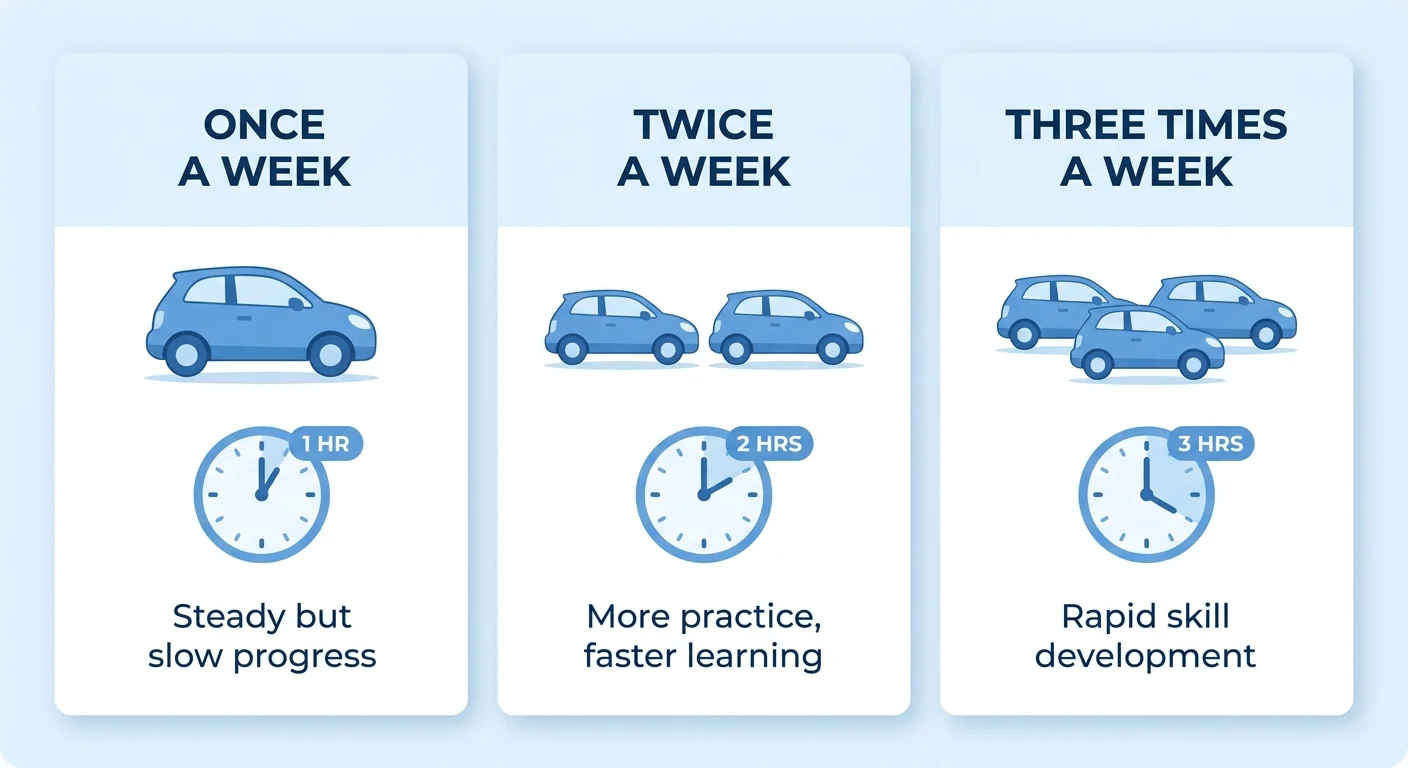
Beginners typically do best with two one-hour lessons per week, or one two-hour lesson, since shorter and more frequent sessions help new drivers absorb road awareness without becoming overwhelmed. A driving instructor can adjust this after your first assessment.
Once a Week
Driving lessons once a week suit learners balancing school, work, or a tight budget. Progress is slower, and you’ll likely need more calendar time before test day. It still works, as long as gaps between lessons don’t stretch past ten days.
Twice a Week
Driving lessons twice a week is the sweet spot for most beginner drivers. You get enough repetition to build muscle memory while still having time to process what you learned. Many learners report reaching test standard within three to four months at this pace.
Three Times a Week
Driving lessons three times a week suit learners under time pressure, such as those with a test date already booked or a job requiring a licence soon. This pace demands more energy and more budget, but it shortens the overall timeline considerably.
| Frequency | Best For | Typical Timeline to Test-Ready |
| Once a week | Tight budgets, flexible timelines | 5 to 8 months |
| Twice a week | Most beginner drivers | 3 to 4 months |
| Three times a week | Learners with a deadline or intensive goals | 6 to 10 weeks |
What Affects How Many Lessons You’ll Need?
The number of lessons you need depends on your confidence, prior driving experience, how often you practise privately, and the quality of your instructor, not just the hours logged. No two learners follow the same path.
Confidence and Nerves
Nervous learners often need more lessons, not because they’re less capable, but because anxiety slows decision-making at junctions and roundabouts. A calm, patient instructor makes a measurable difference here. If nerves are holding you back, ask your instructor to repeat manoeuvres in quieter areas before moving to busier roads.
Age and Prior Driving Experience
Younger learners sometimes pick up vehicle control faster, while older learners often drive more cautiously and follow rules more consistently. If you’ve handled a bike, tractor, or go-kart before, some of that road awareness carries over. Neither age nor experience guarantees a quicker pass, but both shape the learning curve.
Manual vs Automatic
Automatic lessons usually require fewer hours overall, since there’s no clutch control or gear changes to master. Manual lessons take longer to master but give you a licence that covers both car types. Choosing between the two early on affects your entire schedule.
Private Practice Hours
Private practice can reinforce skills learned during driving lessons. GOV.UK says a supervising driver must meet specific requirements, including being at least 21 and having held the relevant full licence for at least three years.
Private practice should support your instructor’s teaching. It shouldn’t introduce habits that conflict with professional guidance.
Sample Weekly Lesson Schedule
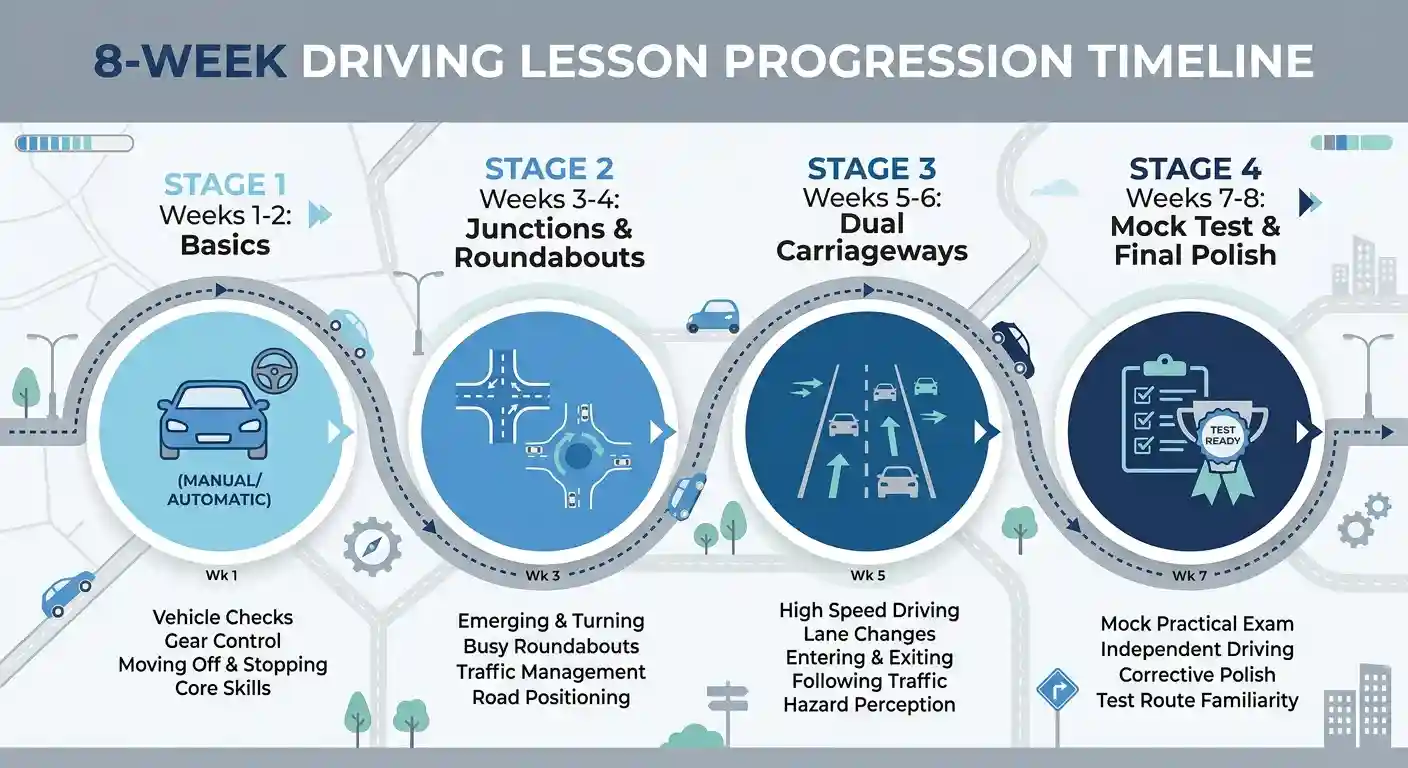
A simple schedule can make the choice easier.
| Weekly plan | Suitable for | Main benefit |
| 1 × 1-hour lesson | Budget-conscious learners | Steady progress |
| 2 × 1-hour lessons | Most learners | Regular skill practice |
| 2 × 2-hour lessons | Faster progression | More continuous driving |
| 3 × 1-hour lessons | Test preparation | More frequent feedback |
| 3+ sessions | Intensive learners | Faster exposure to varied roads |
These are planning examples, not rules. A learner who becomes tired during two-hour sessions may achieve more from shorter lessons.
Key Factors Influencing Your Weekly Timeline
Your weekly timeline depends on your life setup, schedule flexibility, and local conditions.
Financial Resources
Driving tuition is a major financial commitment. Booking driving lessons once a week keeps your short-term costs manageable. Booking lessons in 10-hour blocks often unlocks discounts from local driving schools.
Driving Test Queue Backlogs
Test availability across the UK can feature long waiting lists. Align your lesson frequency so you peak in ability right as your test date arrives, avoiding a long gap where your skills go cold.
Weekly Driving Lesson Examples for Different Learners
Different learners need different weekly patterns, and looking at real examples makes it easier to picture where you fit. These three profiles cover the most common situations we see at our school.
Take Sarah, a university student with lectures three days a week. She books one two-hour lesson every Saturday plus occasional private practice with her dad. It takes her five months, but it fits her schedule without stress.
Then there’s James, who needs his licence for a new delivery job starting in ten weeks. He books three lessons a week and passes his test in nine weeks, though it costs more upfront and takes real commitment.
How Do You Know You’re Ready for Your Test?
You’re ready for your test when you can drive independently, handle unexpected situations calmly, and pass mock tests consistently with only minor faults. Your instructor will usually confirm this before recommending you book.
Watch for a few clear signs. You stop needing constant verbal guidance. Parallel parking and bay parking feel routine instead of stressful. Roundabouts no longer make your palms sweat.
If you’re still hesitant most lessons, that’s useful information too. It simply means a few more weeks at your current pace will serve you better than rushing into a test you’re not fully prepared for.
Pricing Packages
Cost is often the real deciding factor in how many driving lessons you take per week. At Pharez Driving School, we offer flexible pricing packages built around different weekly commitments, from single weekly sessions to intensive multi-lesson blocks for learners working toward a deadline.
Block booking with Pharez Driving School typically works out cheaper per hour than paying lesson by lesson, and it locks in a consistent instructor so your progress doesn’t reset each week. Check our pricing packages page for current rates and available time slots in your area.
Final Thoughts
There is no single rule for how many driving lessons you need per week, but taking two to four hours keeps your momentum strong. Avoid long gaps between sessions, pair your lessons with private practice when possible, and focus on steady progress.
Ready to get behind the wheel? Contact us at Pharez Driving School today to book your initial assessment lesson.
Frequently Asked Questions
How many driving lessons per week should a beginner take?
Beginners should take two hours of driving lessons per week. This provides enough time behind the wheel to build confidence, practice key manoeuvres, and develop muscle memory without causing fatigue or cognitive overload.
How many driving lessons should I have a week to pass quickly?
Three lessons a week is the fastest realistic pace for most learners, often cutting total learning time to under three months. It demands more budget and more mental energy between sessions.
Is taking driving lessons once a week enough to pass?
Yes, taking driving lessons once a week is enough to pass, but it takes longer. Expect your journey to take 9 to 12 months, as you may spend extra time during each lesson refreshing skills learned in the previous session.
Is 4 hours of driving lessons per week too much?
Four hours per week is fine if split into two separate two-hour sessions. Taking four hours in a single day can lead to fatigue, but spreading them across the week speeds up your learning process safely.
Do automatic lessons mean fewer lessons per week?
Not necessarily fewer per week, but often fewer overall, since there’s no clutch control to master. The weekly pace still depends on your confidence and available time, regardless of car type.